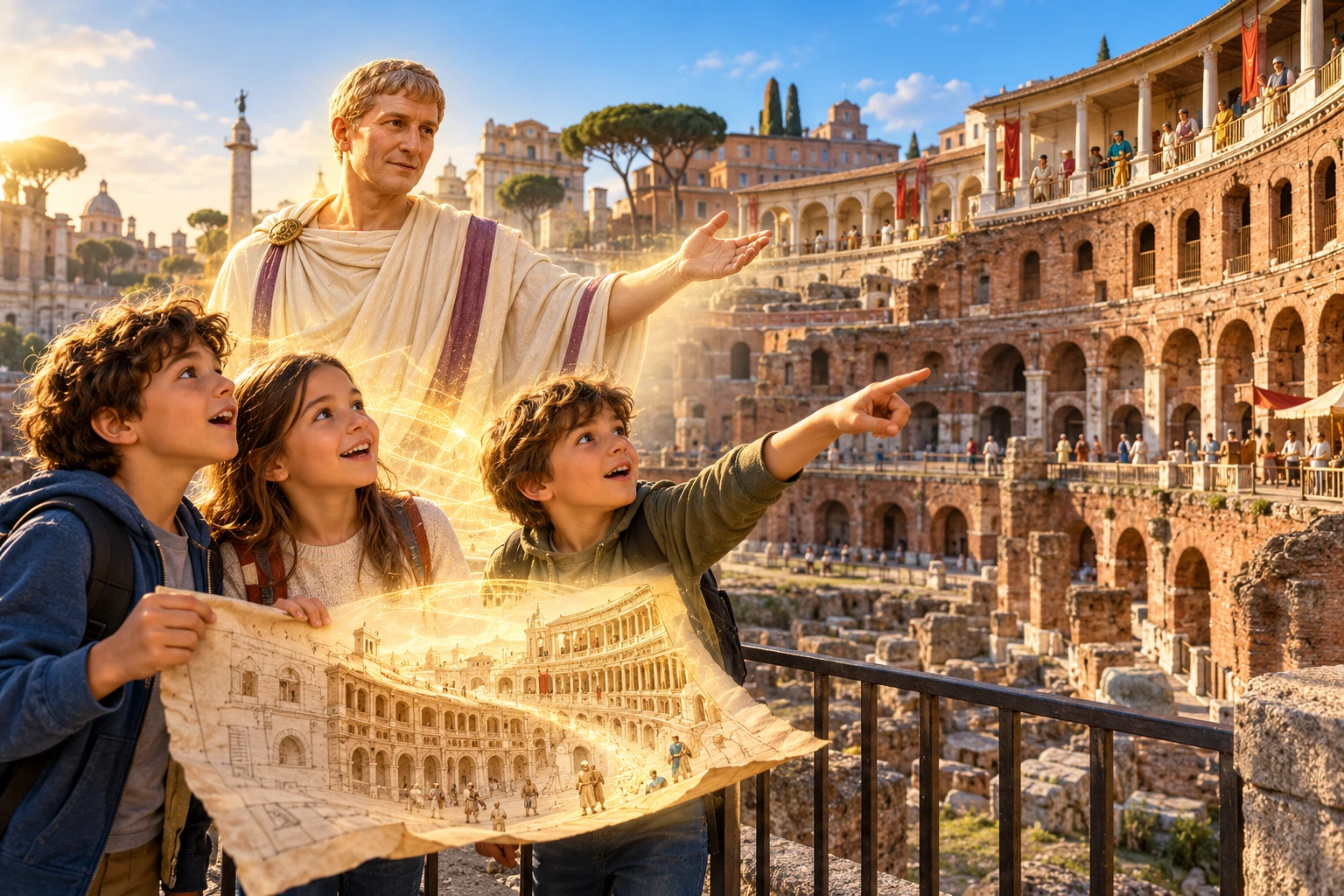
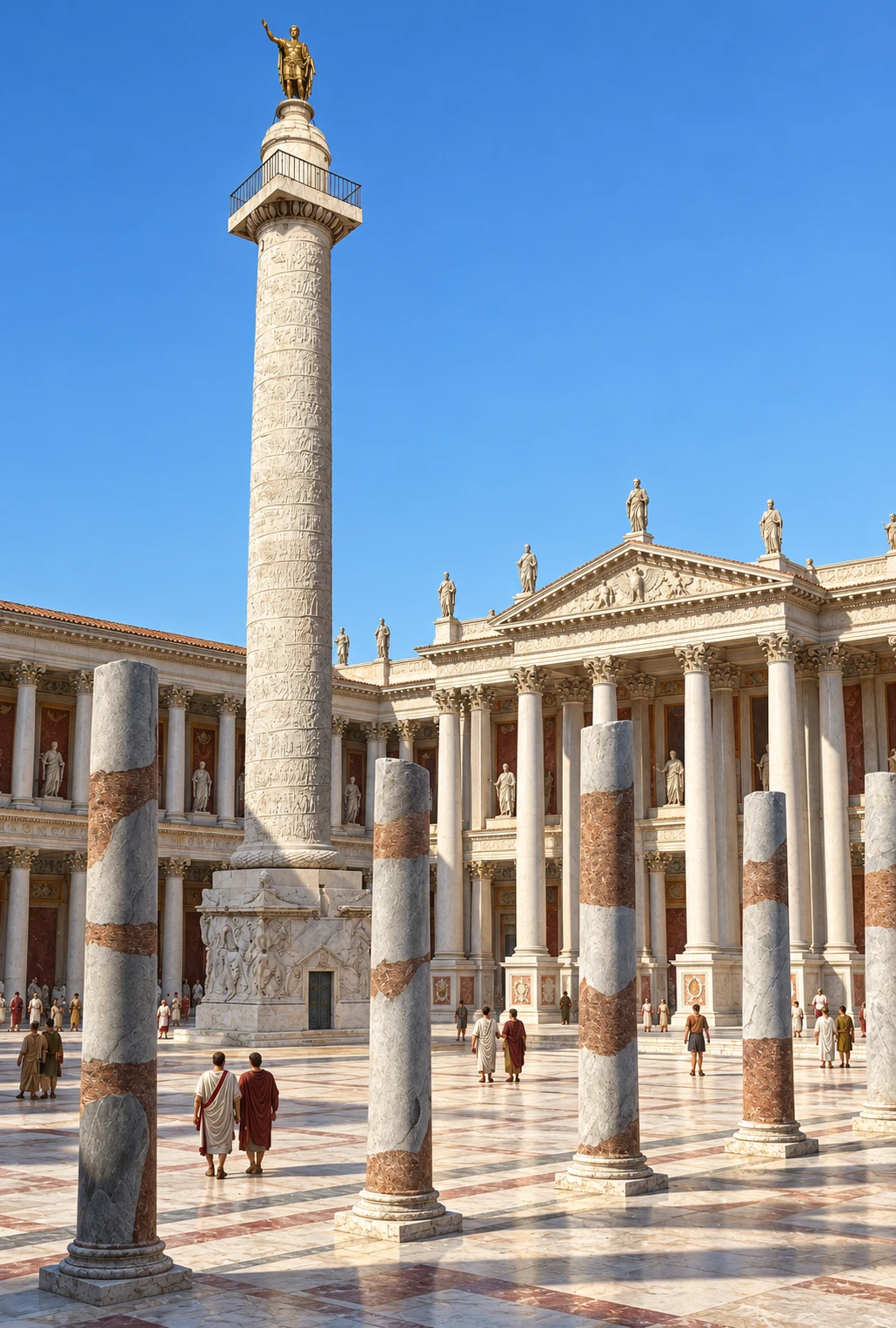
History comes to life · AI promotional illustration. Trajan appears in the children’s imagination; the visit is led by a guide, without an actor in costume.
DURATIONAround 2 hours
RECOMMENDED AGEAges 6–12
SMALL GROUPMaximum 12 people
ADULTS / AGES 3–17110 € / 88 €
A VISIT TO SHARE
First, we look. Then, we discover why.
We enter Trajan’s Markets and the Museum of the Imperial Forums with a guide who adapts the storytelling to younger visitors. We observe great vaults, look for details among the museum fragments and follow an ancient street. Each stop presents a question, a clue or a small challenge to tackle together.
Present-day photographs and reconstruction images help us imagine the spaces of the past. Children contribute their own ideas, while adults share the discovery. For teenagers aged 13–17, we explore engineering, imagery and messages of power in greater depth.
Who was Trajan, emperor from AD 98 to 117? We will discover him through the buildings and images he chose to tell the story of his Rome. The name “Markets” is modern: the complex served various public functions, including administration. We will discover why a row of doors is not enough to prove that every room was a shop.
THE SAME ARCHITECTURE, TWO PERSPECTIVES
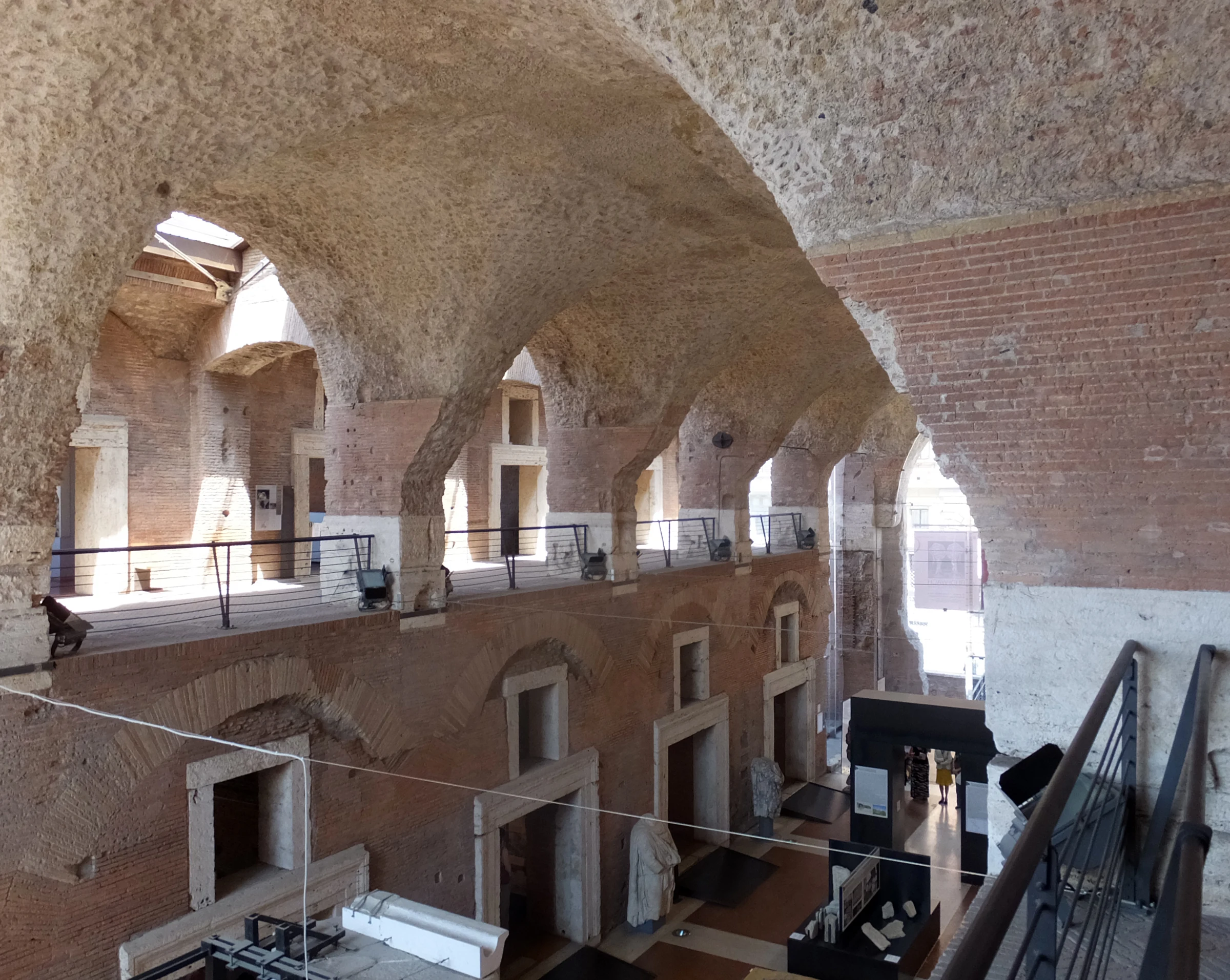
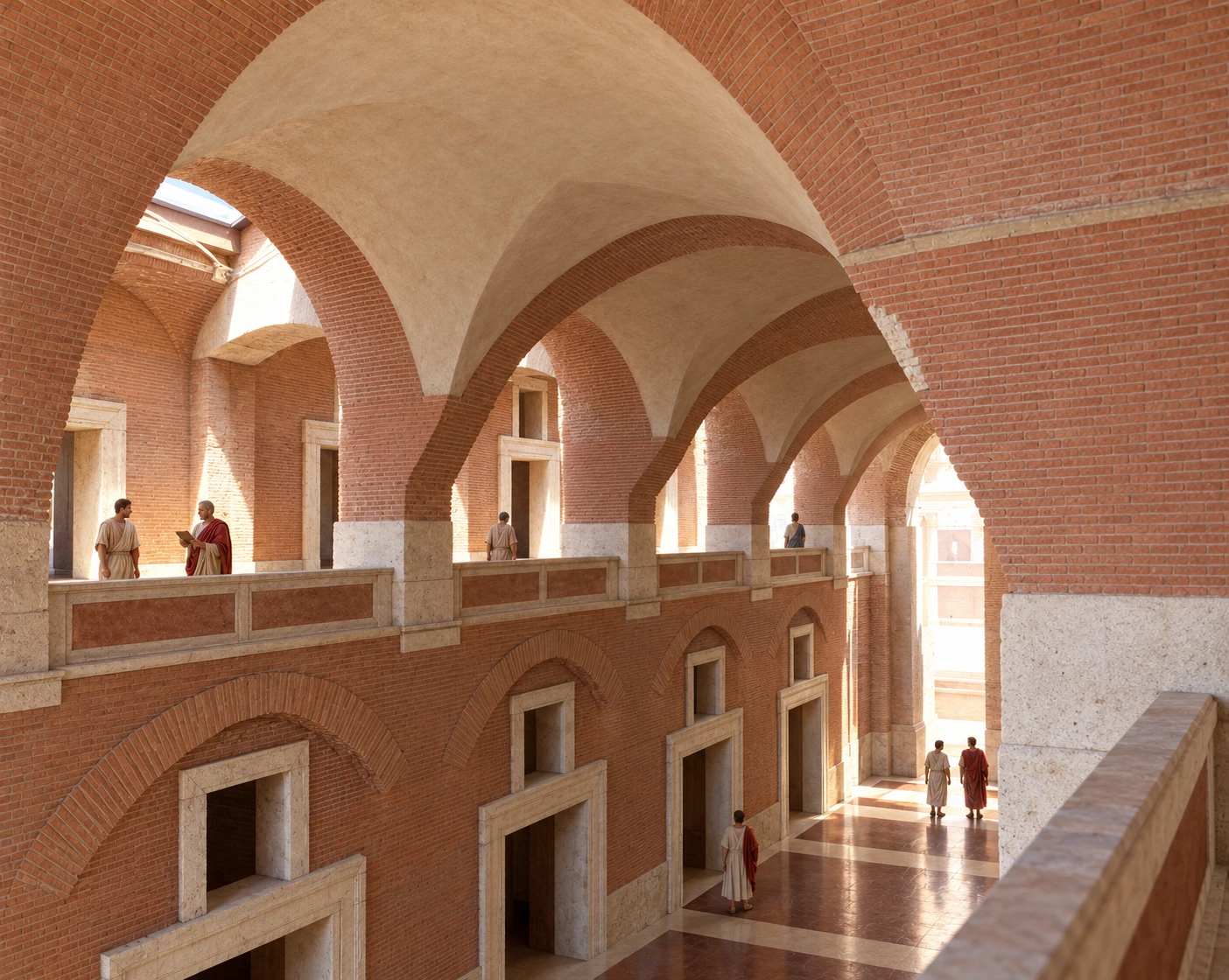
The Great Hall. Today and as we can imagine it.
Today · Real photographThe vaults, openings and museum displays.In antiquity · Evocative AI reconstructionAn aid to imagining the space: finishes, people and furnishings are interpretative, rather than an archaeologically verified reconstruction.
What can you recognise in both images? Find a vault and an opening, then describe what has changed.
Images open in full. Great Hall photograph: Amphipolis, CC BY-SA 2.0; reconstruction derived from the photograph, CC BY-SA 2.0. Sources and credits.
TODAY AND IN ANTIQUITY
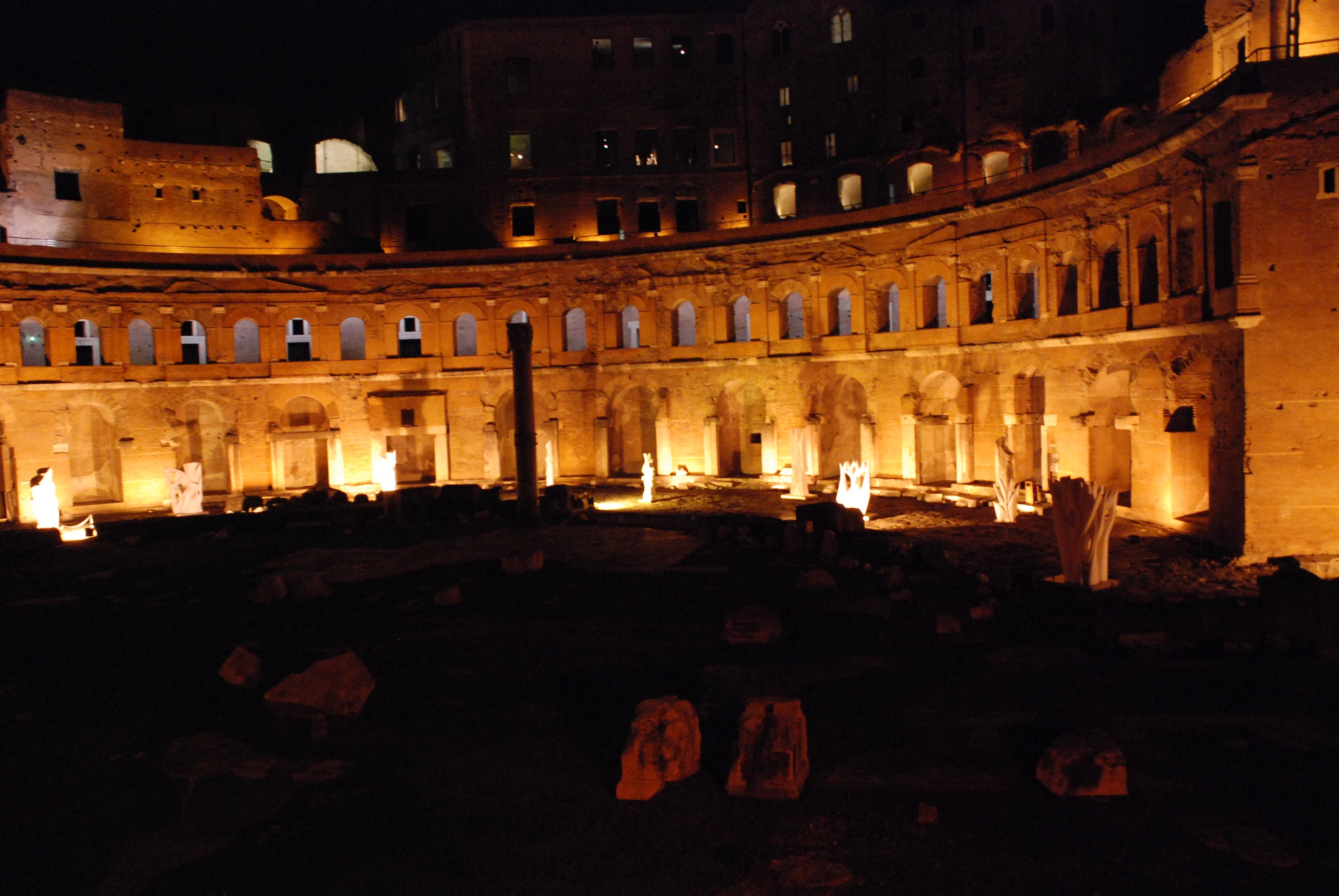
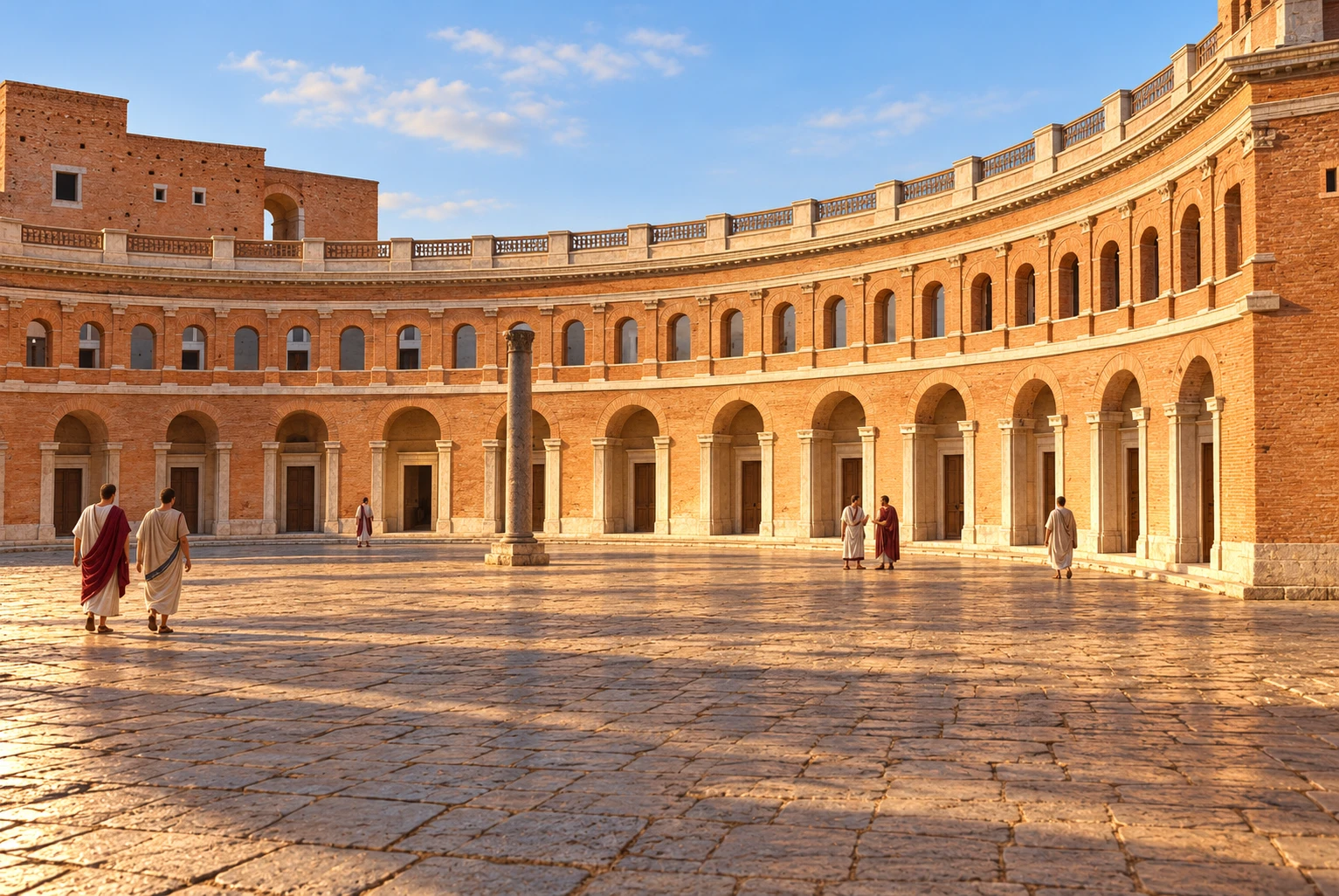
The Great Hemicycle: embracing the space
Today · Real photographObserve the surviving structures.In antiquity · Evocative AI imageAn interpretation of the architecture in Roman times, with imagined additions and finishes.
Your mission: Count a row of openings. How does the sense of space change between the evening photograph and the image of the past?
Tap a photograph to see it in full. Images of antiquity are visual interpretations, not archaeologically verified reconstructions. Sources and licences.
THE ROUTE FOR CHILDREN
Five missions. A city to read.
01
The Great Hall
Young architects at work
Look at the curved roofs and find the points where they meet. How does such a large hall stay up? Your guide explains Roman engineering through simple images and gestures.
02
The Museum of the Imperial Forums
Detectives among the fragments
A decoration, a cornice, part of a column: we examine the finds to understand which buildings they belonged to. We distinguish original pieces from additions identified in the displays.
03
Via Biberatica
A street full of clues
Look for paving stones, thresholds and openings. Describe a doorway and invite the others to identify it: an observation challenge, without running or touching the structures.
04
The view over the Forums
Rome yesterday and today
We compare ancient remains, photographs and evocative images. We distinguish what we can actually see from what we can only imagine.
05
Trajan’s Column from outside
A story spiralling upwards
Depending on the agreed route, we finish with a walk to the Column. We observe the form of its carved narrative and discover how an emperor wanted to be remembered.
The route may change according to openings and the group’s needs. The visit includes admission to the Markets and museum; it does not include access to the excavated area of Trajan’s Forum or the interior of the Column.
TODAY AND IN ANTIQUITY
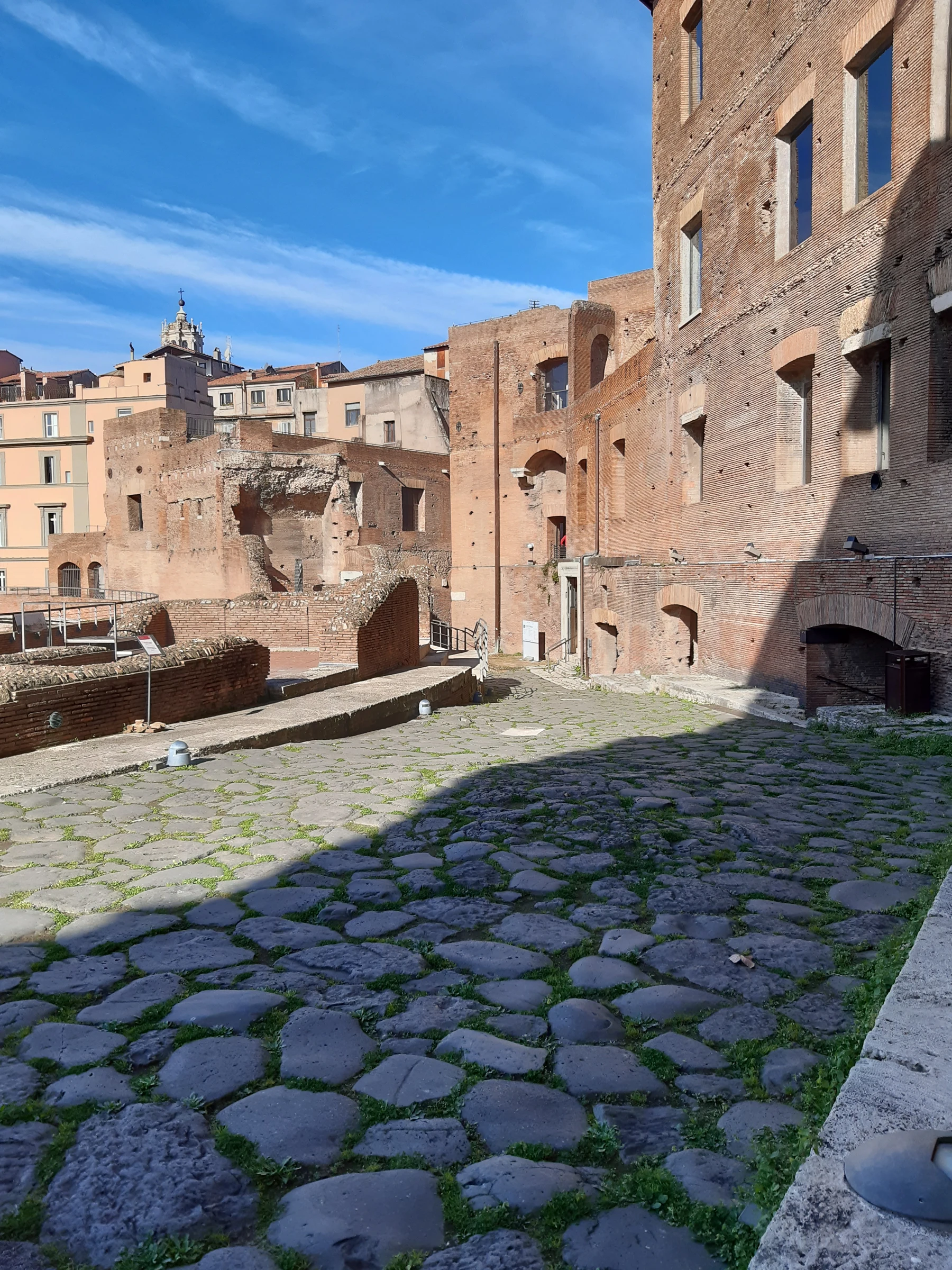
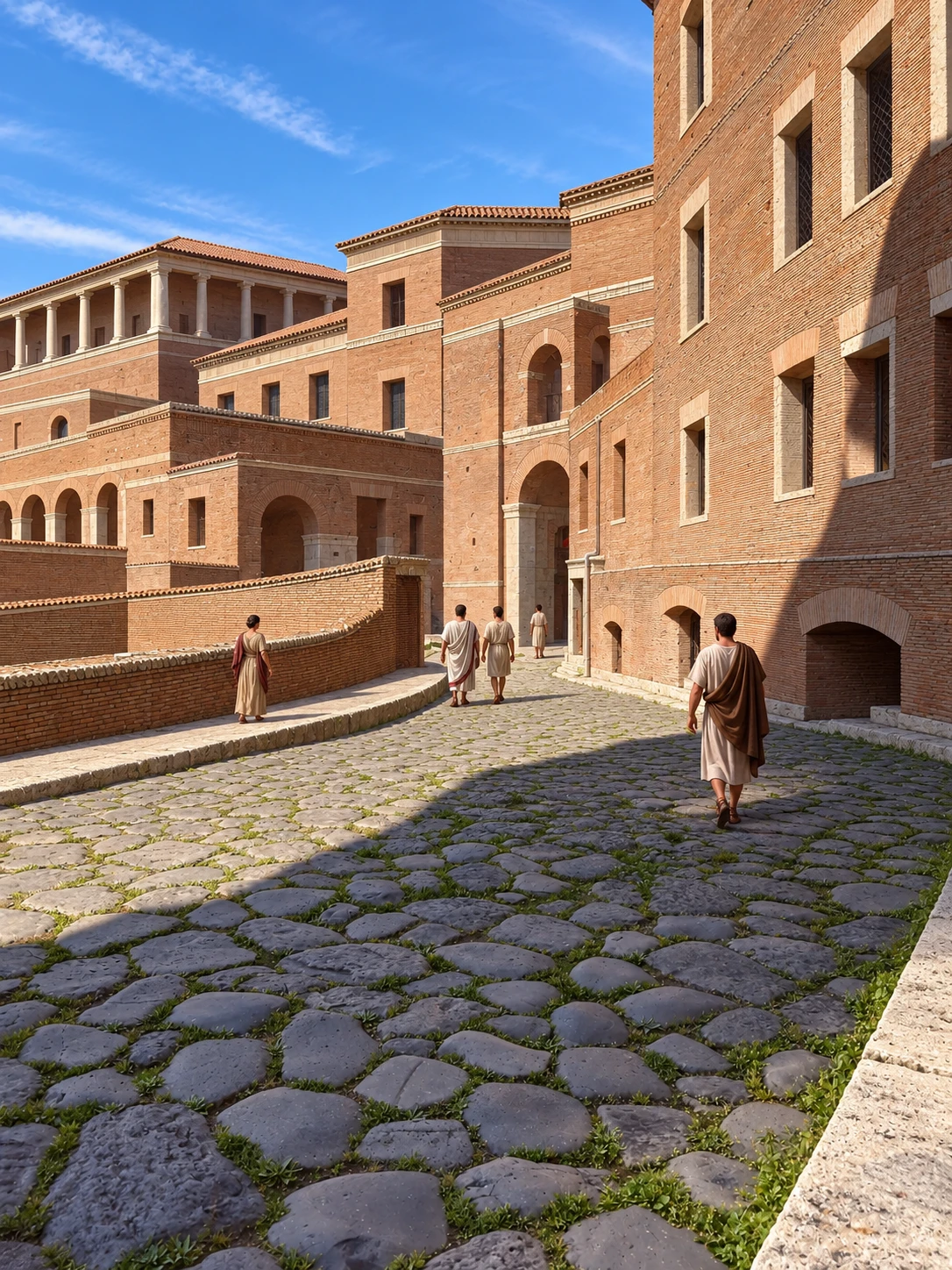
Via Biberatica: a street full of clues
Today · Real photographObserve the surviving structures.In antiquity · Evocative AI imageAn interpretation of the street and buildings in use: finishes and people are imagined.
Your mission: Follow the curve of the street in both images. Which doorways and stones can you recognise?
Tap a photograph to see it in full. Images of antiquity are visual interpretations, not archaeologically verified reconstructions. Sources and licences.
TODAY AND IN ANTIQUITY
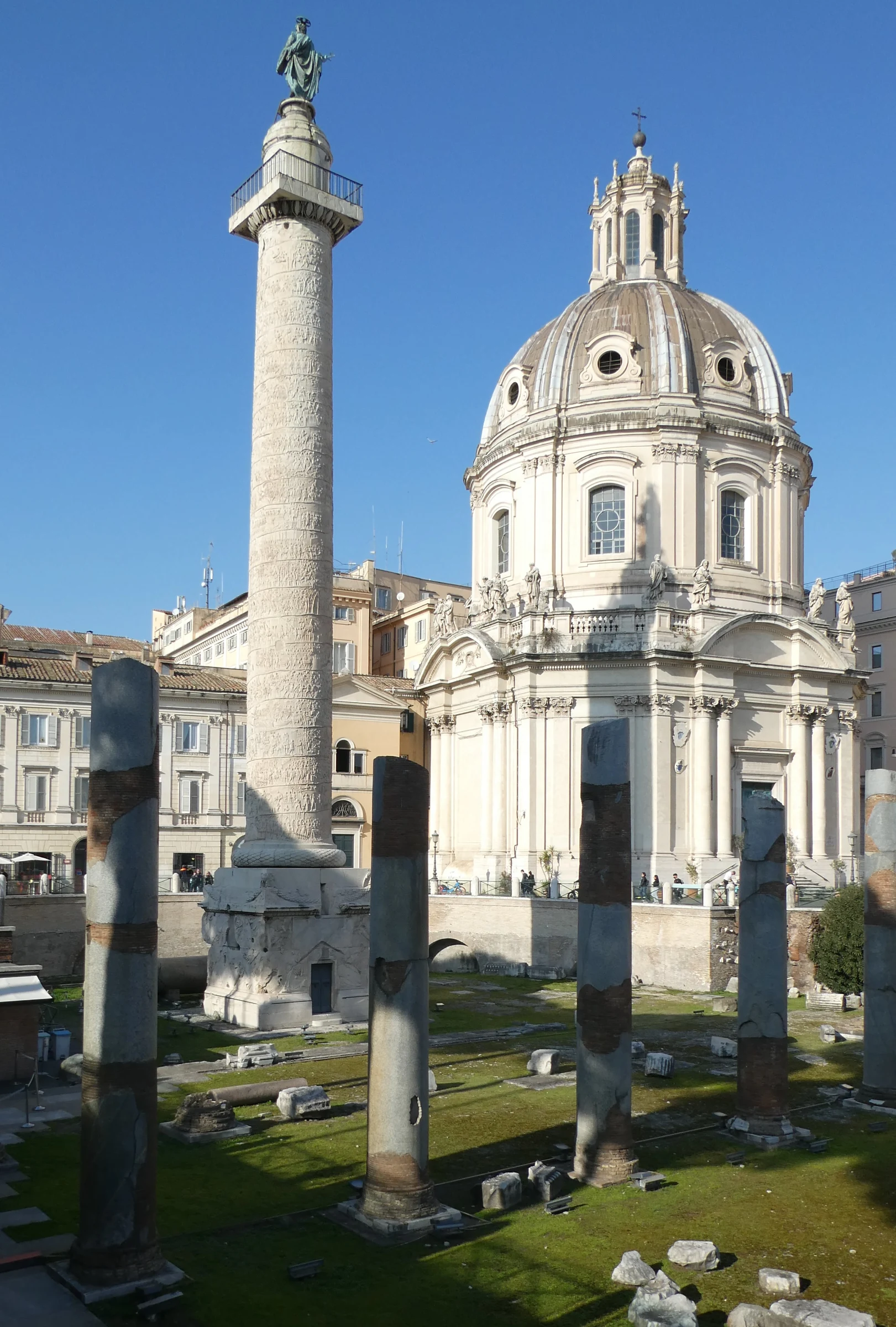
The Column: a story spiralling upwards
Today · Real photographObserve the surviving structures.In antiquity · Evocative AI imageAn image of historical imagination to discuss the Column and Trajan. Buildings, the arrangement of columns and details do not document the Forum’s exact appearance.
Your mission: Find the spiral narrative and look at the statue on top. Your guide will explain whom it originally represented.
Tap a photograph to see it in full. Images of antiquity are visual interpretations, not archaeologically verified reconstructions. Sources and licences.
BOOK DIRECTLY WITH HERMES
Your family. Our way of telling Rome’s story.
Small family group
110 € adult aged 18–99
88 € children aged 3–12 and teenagers aged 13–17
Price per person. Departure requires at least 4 paying participants in total; maximum 12 people, including children.
Licensed guide, Hermes assistance, standard admission to the Markets and museum, audio headsets and visual materials during the visit included.
Ages 0–2: free; include them in your request and in the total group size. For ages 3–5, we adapt the storytelling: tell us their ages before confirmation. Please mention any free admission or museum concessions you may qualify for; ticket concessions are separate from the guided visit service.
Hermes confirms the date, time, language, total price and conditions before booking. Selecting a date does not guarantee a departure.
We meet at the museum entrance.
Trajan’s Markets – Museum of the Imperial Forums Outside the entrance, Via Quattro Novembre 94, Rome.
Please arrive 15 minutes before the confirmed time. Wait for your Hermes guide outside the museum entrance at Via Quattro Novembre 94: we will begin the visit together from here.
The meeting point is outside the museum entrance. Please wait for your guide before entering.
Duration: around 2 hours, including the final outdoor walk.
Languages on request: Italian, French, English and Spanish, subject to guide availability.
Included: licensed guide, Hermes assistance, standard museum admission ticket and audio headsets. Transfers, refreshments and admission to other sites are not included.
Make the most of your visit.
The route includes indoor spaces, outdoor sections, steps and ancient paving. For your visit, we recommend:
A hat for sunny sections of the route.
Water for outdoor breaks, following the museum’s guidance.
Sunscreen, especially during the warmer months.
Comfortable clothing suited to the season.
Comfortable shoes for walking on ancient paving.
ID for any applicable reduced-price tickets.
If you have mobility needs or are travelling with a pushchair, let us know before confirmation: we will check the route and available museum accessibility aids together.
The museum currently lists opening hours of 9:30–19:30, with reduced hours on 24 and 31 December and closure on 1 May and 25 December. Hermes visits are available on request; they are not scheduled on 1 January, 1 May, 25 December or the first Sunday of the month. Selecting a date does not guarantee availability.
Museum tickets purchased in advance cannot be refunded or changed. The Hermes service terms and ticket costs are provided before confirmation.
Families’ questions
Do adults take part in the visit?
Yes. Children must be accompanied by a responsible adult. The visit is designed to involve the whole family.
Is it also suitable for older children?
Yes. The main route is designed for ages 6–12; for ages 13–17, we adapt the questions and explore topics in more depth. Include their ages in your request.
Are the images of the past photographs?
No. The photographs show the sites as they are today; evocative AI reconstructions are identified in the captions and are used to encourage comparison.