A museum at the heart of your trip
The symbols of a city.
The masters of art history.
The Capitoline She-wolf, the original Marcus Aurelius and the Dying Gaul. Then Bernini, Caravaggio and a picture gallery spanning the Renaissance and the seventeenth century. Here you meet works that gave Rome a face and artists who changed the way we see.
The collection’s story begins in 1471, when Pope Sixtus IV gave a group of bronzes to the people of Rome. The museum opened to the public in 1734: one of the world’s oldest museum institutions, with an enduring bond to its city.
Rome’s beginningsThe She-wolf, the Spinario and the Capitoline Fasti: myths, everyday gestures and names carved in stone.
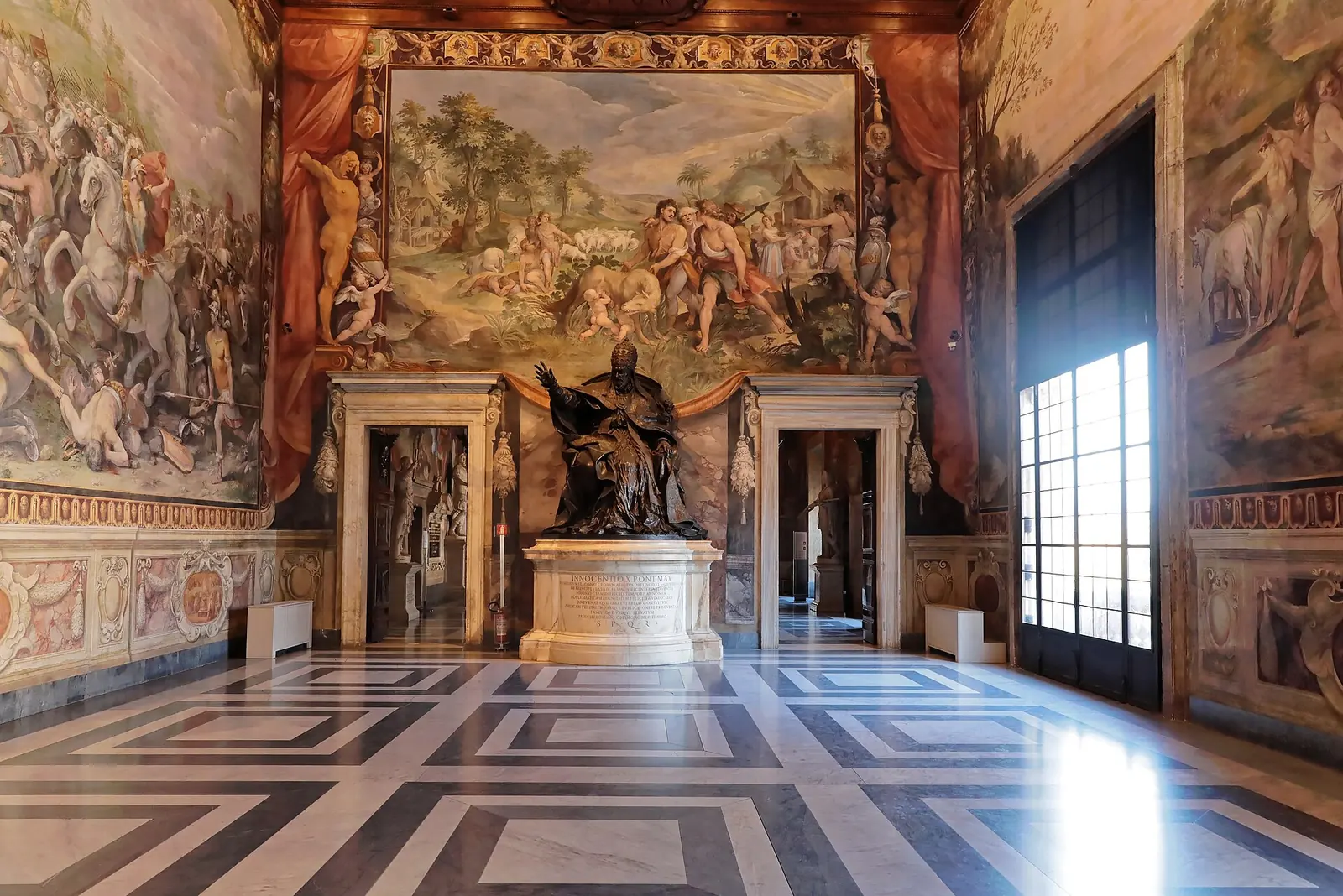
The rooms are works of artFrescoes by Cavalier d’Arpino and Tommaso Laureti bring heroes, battles and Roman memory to life.
Great masters, up closeFrom Bernini’s sculpture to two Caravaggios, Venetian painting and European Baroque art.
The Hermes itinerary
From legends to masterpieces: seven encounters with Rome
01 · The Capitoline Hill: the city becomes a stage
Our story begins in the square redesigned by Michelangelo. Legends, civic memory and architecture prepare us for the museum: from Rome’s symbolic hill to the palaces that hold its treasures.
02 · Walls that tell stories: heroes, battles and beginnings
In the Hall of the Horatii and Curiatii, frescoes by Giuseppe Cesari, known as Cavalier d’Arpino, turn Rome’s early legends into grand scenes: the discovery of the She-wolf, the battle of the Horatii and Curiatii, and the abduction of the Sabine women. Your guide helps you read the gestures, characters and meanings.
The journey continues through the Hall of the Captains, with examples of courage painted by Tommaso Laureti, and the Punic Wars in the Hall of Hannibal, whose decoration is traditionally attributed to Jacopo Ripanda. In the Hall of the Triumphs, the frieze by Michele Alberti and Jacopo Rocchetti celebrates the triumph of Lucius Aemilius Paullus.
03 · The She-wolf, the Spinario and the names that made history
Before the Capitoline She-wolf, we explore how a symbol is born: the small Romulus and Remus were added in the Renaissance. Their attribution to Pollaiuolo is a proposal rather than a certainty.
The Spinario, a boy removing a thorn from his foot, brings antiquity close through an everyday gesture. The Capitoline Fasti, consular and triumphal, reveal Rome’s public memory: names and offices carved in stone, to be read like pages of political history.
04 · The face of power: Marcus Aurelius and Constantine
The original equestrian statue of Marcus Aurelius is one of the visit’s most moving encounters. We look at the emperor’s gesture, the horse and the strength of an image made to endure. The great fragments of the Colossus of Constantine express another vision of power: monumental, distant and almost beyond human scale.
On the staircase, we also read the historical reliefs featuring Hadrian and Marcus Aurelius, originally from public monuments: images designed to celebrate emperors and communicate their power.
05 · Bernini: wonder carved in marble
In Gian Lorenzo Bernini’s Medusa, transformation becomes emotion: the face, the snakes and the tension within the marble. We pause to look closely at the details.
We also encounter the monumental statue of Urban VIII, by Bernini and assistants, in the Hall of the Horatii and Curiatii. A comparison with Innocent X by Alessandro Algardi reveals two leading Baroque sculptors and two ways of representing authority.
06 · Hadrian’s Villa and the beauty of antiquity
The precious Mosaic of the Doves, from Hadrian’s Villa in Tivoli, reveals extraordinary refinement: tiny tesserae create water, feathers and reflections. The villa also yielded the two Centaurs, carved in dark marble and signed by Greek artists. In Palazzo Nuovo, the Dying Gaul and the Capitoline Venus invite us to see the body, dignity and beauty through ancient eyes.
When accessible, the Tabularium offers a view over the Roman Forum, connecting the works to the city they came from.
07 · The picture gallery: meeting the great masters
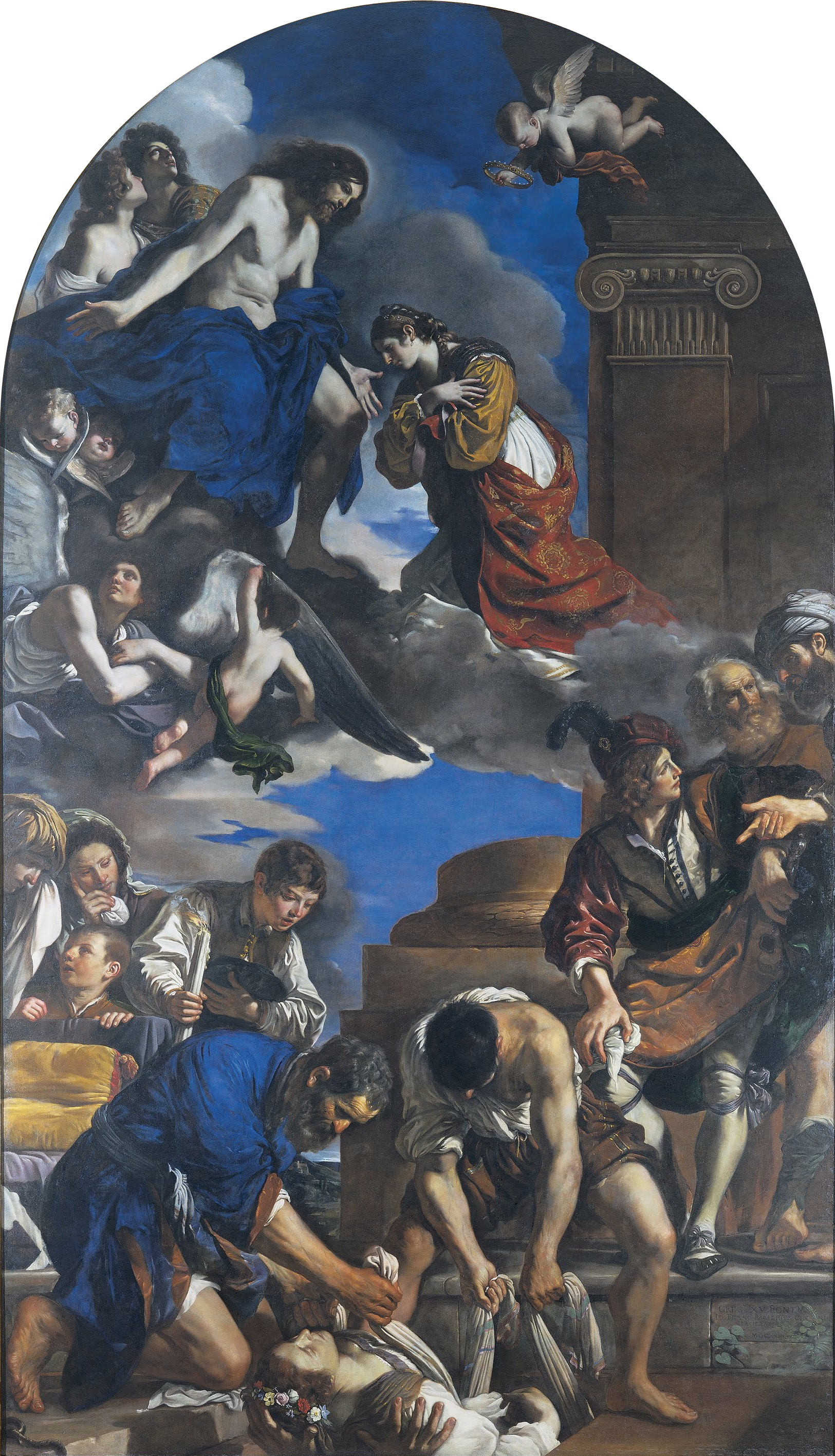
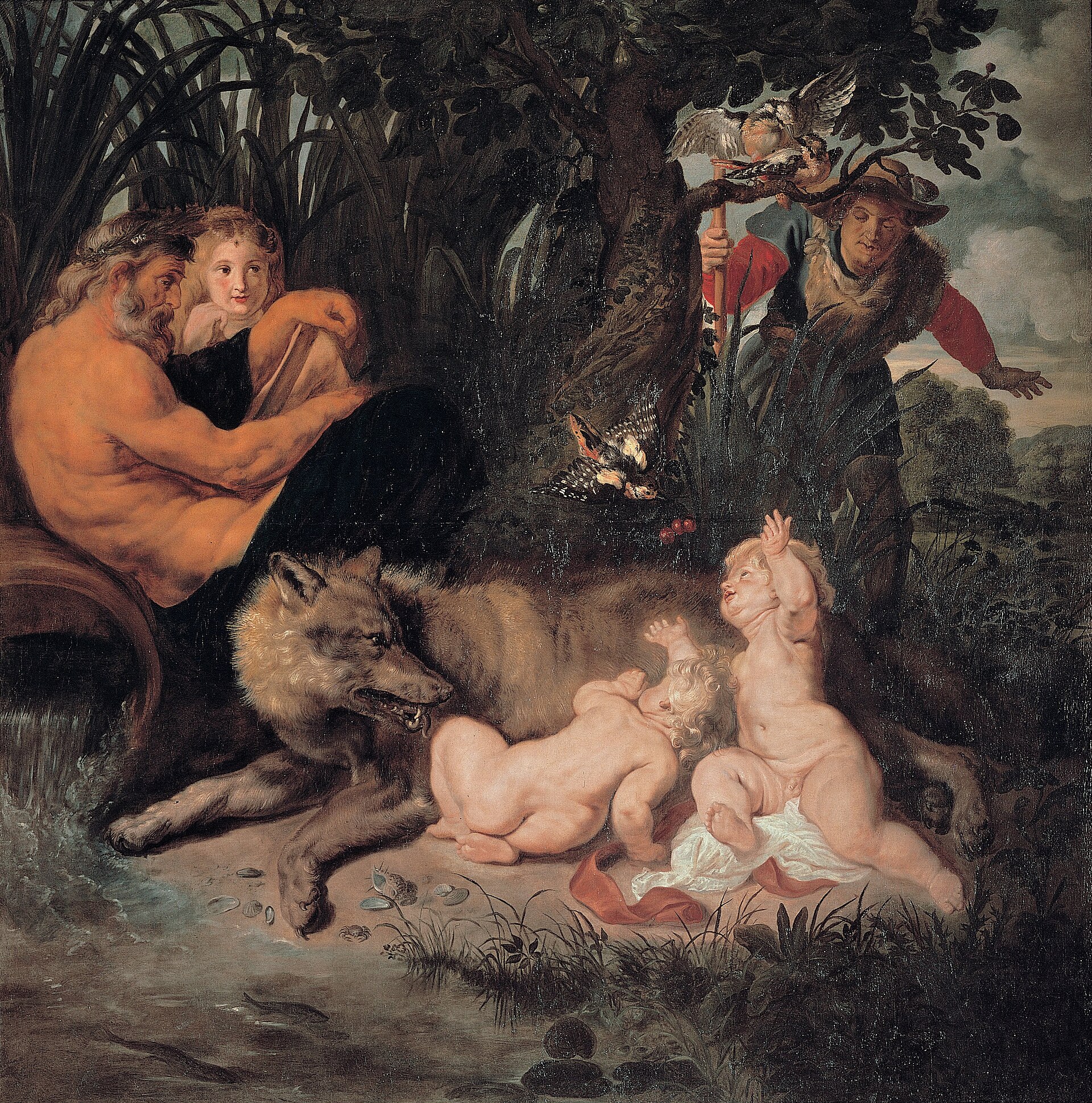
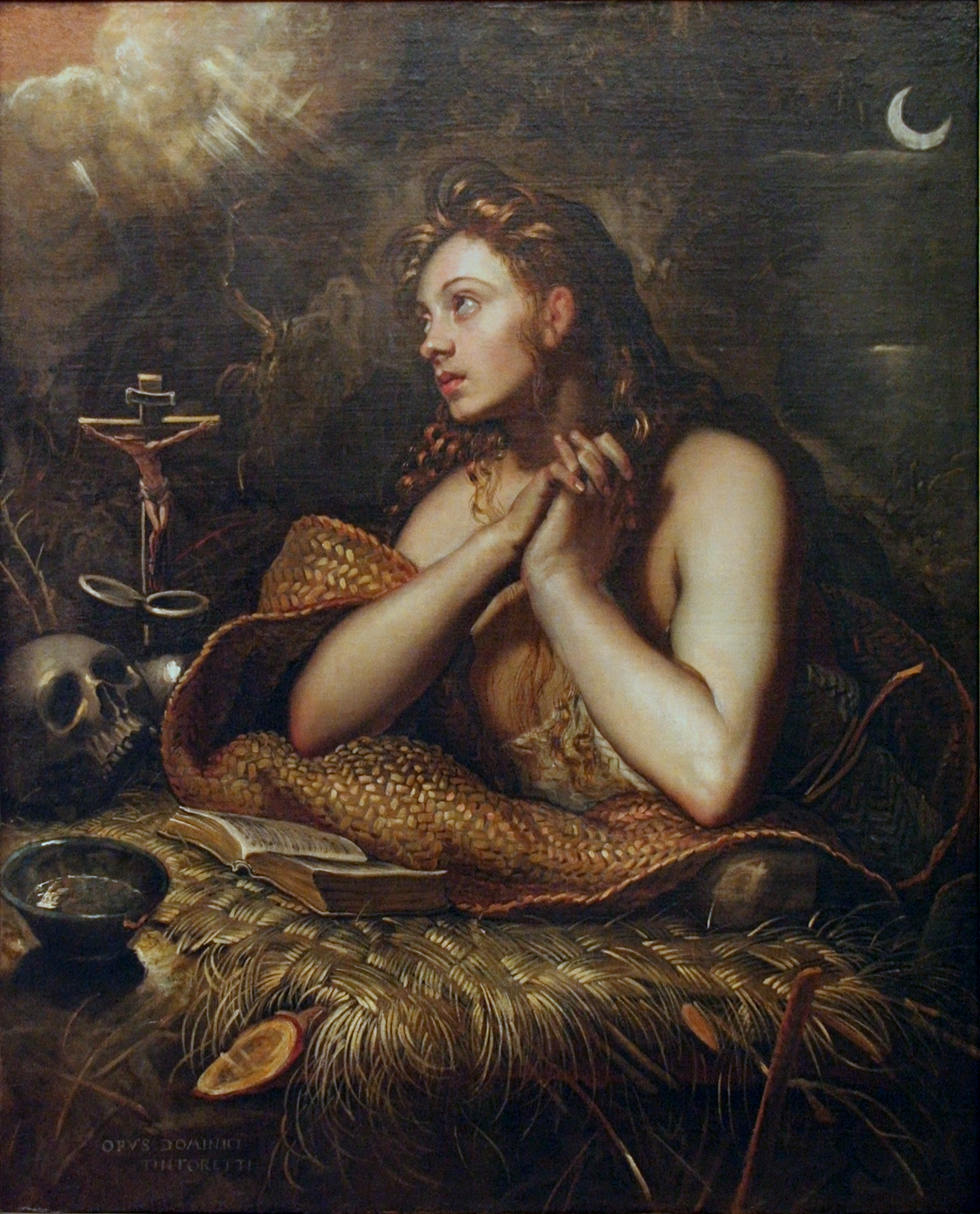
Caravaggio, Guercino, Rubens and Domenico Tintoretto, with Titian and Veronese in the Venetian room: painting adds new voices to Rome’s story. Your guide helps select the works and details to explore, from everyday encounters to monumental altarpieces.
Explore the picture gallery’s masterpieces ↑
This itinerary presents the works around which we build the visit. Order and selection depend on the agreed time, your interests and accessible rooms. Loans, conservation work or closures may make individual works unavailable.
Your Rome, waiting to be discovered
A wonderful choice for your trip
Looking for a wonderful alternative to the Vatican Museums? Discover the Capitoline Museums: Caravaggio, Bernini and the great masters, frescoed rooms and masterpieces that tell Rome’s story. Choose them for their history, rich collections and deep connection to the city.
A memorable visit, at your own pace
For first-time visitors, for those returning with fresh eyes and for everyone who loves the stories behind images. Your guide connects the works and welcomes questions: characters acquire names, episodes make sense and the city gains depth.
Tell us about mobility needs, pushchairs or other requirements so we can check access and agree on a suitable itinerary before confirmation.

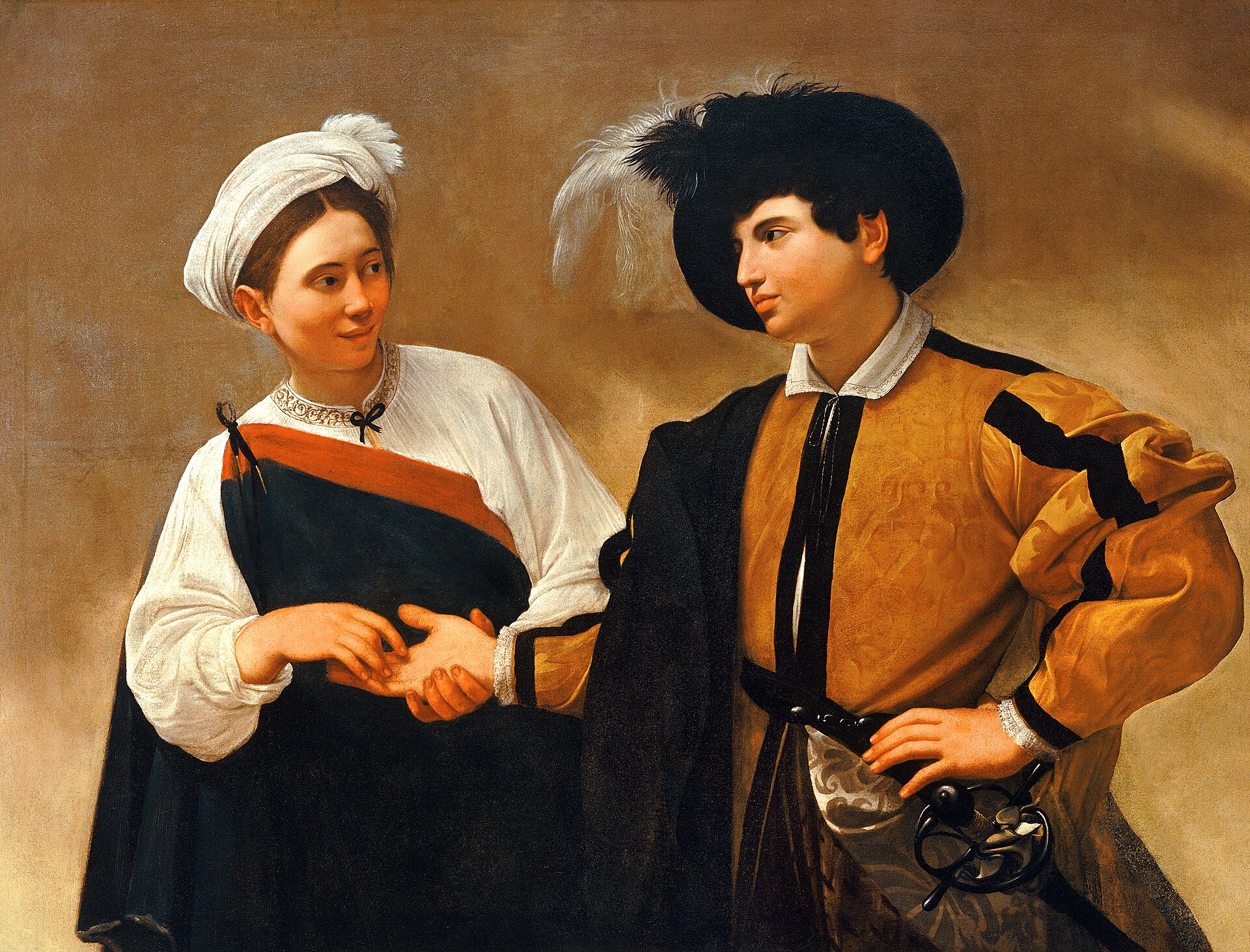 View the complete artwork ↗