
HERMES · ROME’S PORT CITY
Ostia Antica
to experience.
Walk through history.
Rediscover a city’s everyday life.
DURATION OF THE STANDARD ROUTEAround 3 hours
PARTICIPANTSTour designed for adults
TOUR OPTIONSSmall group or private
PRICES€99 per person
ROME IS MORE THAN A PLACE TO VISIT. IT IS A CITY TO EXPERIENCE.
Life in Rome,
beyond its monuments.
Near Rome’s coast, a Roman city is waiting to tell you about its life. Ancient Ostia is our “Pompeii on Rome’s doorstep”: streets, houses, shops, baths and a theatre bring an entire city to life in your imagination. Its history differs from Pompeii’s, shaped by change and gradual abandonment.
Here we discover the world that supplied the capital. People and goods passed through Ostia and the imperial port system: grain, wine, oil and building materials. The story expands to Mediterranean routes, spices and animals destined for public spectacles, distinguishing local evidence from the wider history of trade.
While the Roman Forum mainly reveals the capital’s political and monumental heart, Ostia brings us closer to everyday life: eating, living, working, meeting and praying. Among the ruins, we rediscover the people.
DEPARTURE FROM THE TICKET OFFICE
From a global trading port to everyday life.
- 01
The necropolis outside the walls
The stories begin before we enter the city
From the ticket office, we reach the necropolis along the ancient Via Ostiense, before Porta Romana. The tombs tell us about remembrance, families and the relationship between the city of the living and the city of the dead.
- 02
Porta Romana and the Decumanus
Enter a city from two thousand years ago
We pass through the monumental entrance and follow the Decumanus. Among apartment buildings, shops and warehouses, we imagine residents, merchants, sailors and travellers meeting: the everyday face of Rome’s port.
- 03
Baths of Neptune
The sea, pictured in mosaic tiles
We explore bathing, sport and social life in the bath complexes. When uncovered and visible, mosaics depicting Neptune and his marine procession enrich our discovery of life at the baths.
- 04
Theatre and Square of the Corporations
Entertainment and trade across the Mediterranean
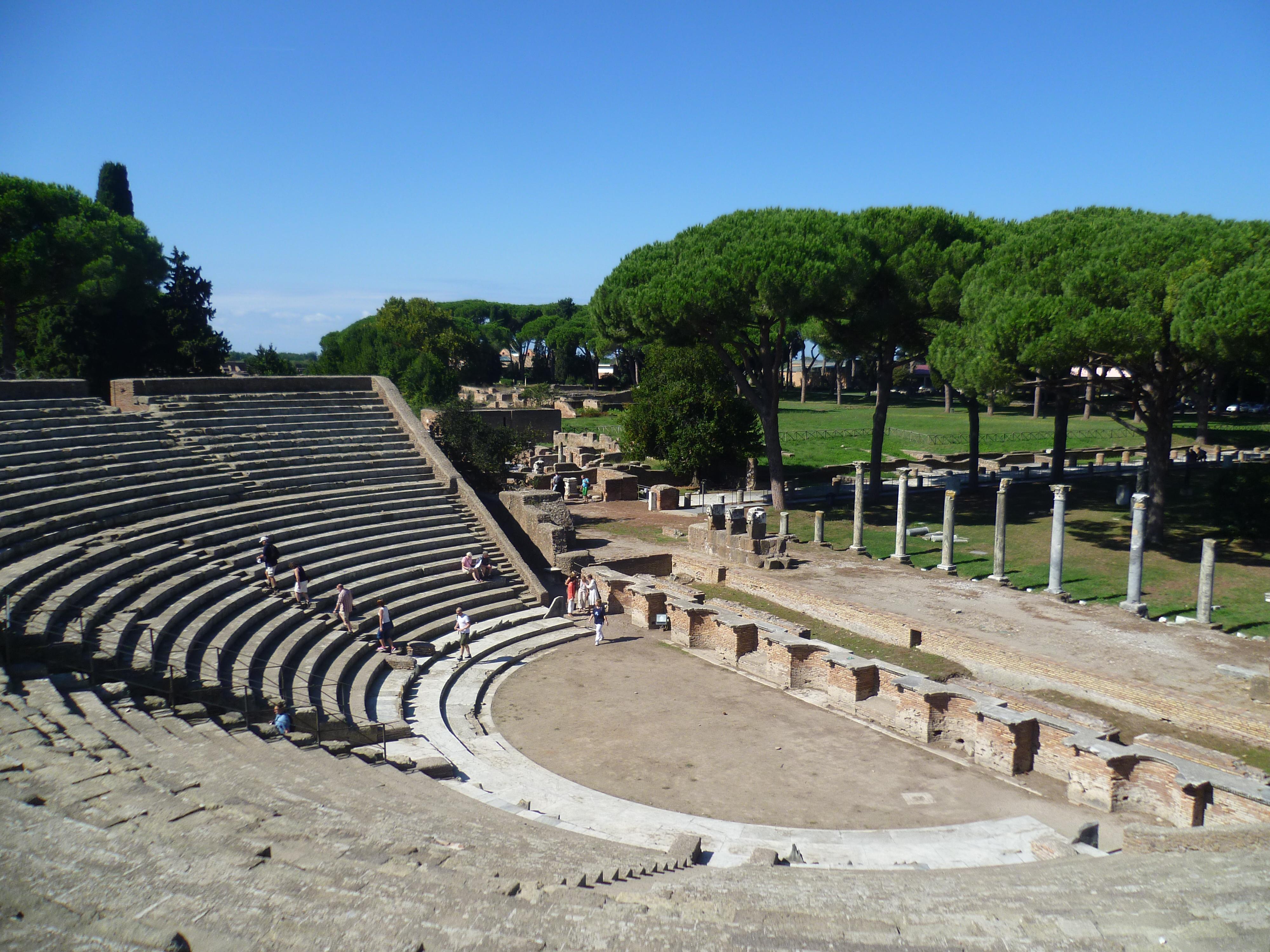
The theatre introduces us to the city’s entertainment. Behind the stage, the Square of the Guilds preserves mosaics of ships, lighthouses and trade symbols: the emblems of shipowners and merchants. Separate from the Forum, this space represented the city’s commercial activities.
- 05
The Thermopolium and residential neighbourhoods
A stop at a Roman tavern
At the counter of the Thermopolium on Via di Diana, when accessible, we discover food, wine and social life. Houses, shops and places offering hospitality help us imagine the city’s inhabitants and those who stopped here after a journey.
- 06
The Forum, Capitolium and latrines
Public spaces, private lives
The Forum and Capitolium tell the story of civic and religious life. We complete the picture with the baths and latrines near the Forum, subject to access: water, hygiene and everyday habits become part of the story.
Ostia, where cultures and religions met
We also discuss the Jewish community and the earliest evidence of Christianity. The synagogue stands in an outlying area, towards the ancient coastline: a visit can be arranged as an extension, with a separate duration and price, subject to access checks.
For the Constantinian basilica, we introduce its history and archaeological research: the excavation may be covered or inaccessible. Any visit to the site depends on openings authorised by the Archaeological Park. These sites are not part of the standard three-hour itinerary.
The order of stops and access to rooms may change due to conservation, works, events and Park regulations. Itineraries follow open routes only.
A CITY TO SEE. A LIFE TO IMAGINE.
Two thousand years of stories.
And the wonder of being there.
Pause before Neptune’s marine procession. Imagine voices in the baths, the footsteps of the fire brigade and the names remembered on tombs. With your guide, details become stories: Ostia comes to life, one encounter at a time.
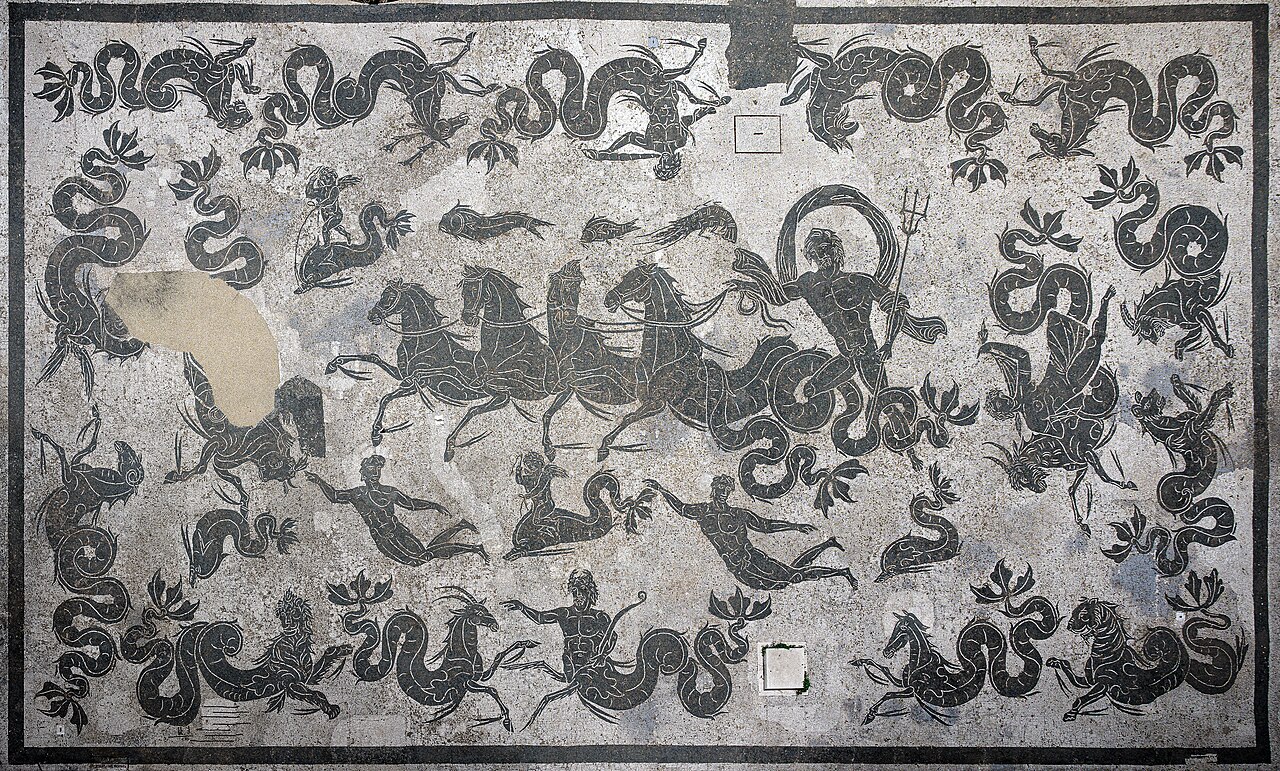
The Baths of Neptune
Neptune and sea creatures animate the black-and-white mosaic. A window onto the art and meeting places of the Roman city.
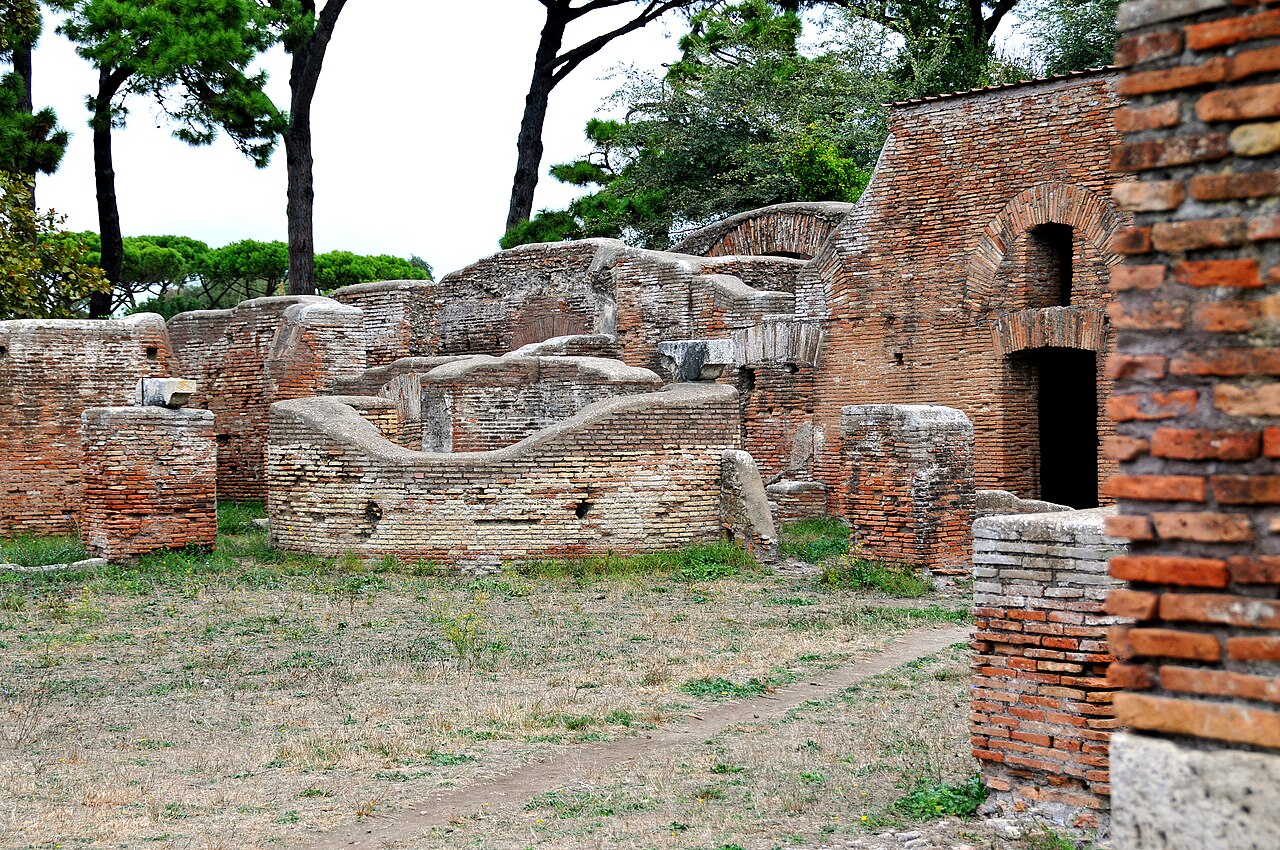
The Barracks of the Vigiles
The quarters of the vigiles tell the story of those who protected the city from fire.
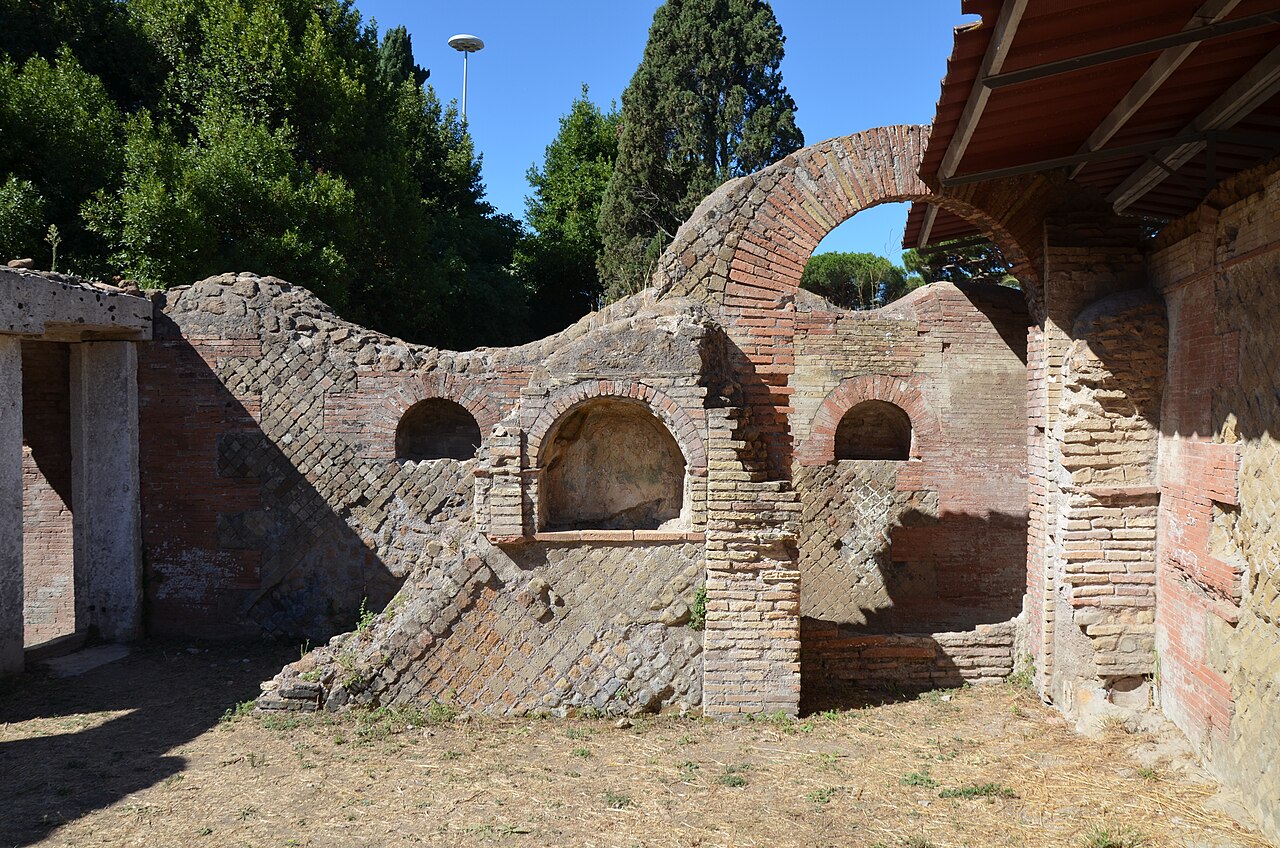
The necropolis at Porta Romana
Outside the city gate, funerary buildings preserve the memory of Ostia’s ancient inhabitants.
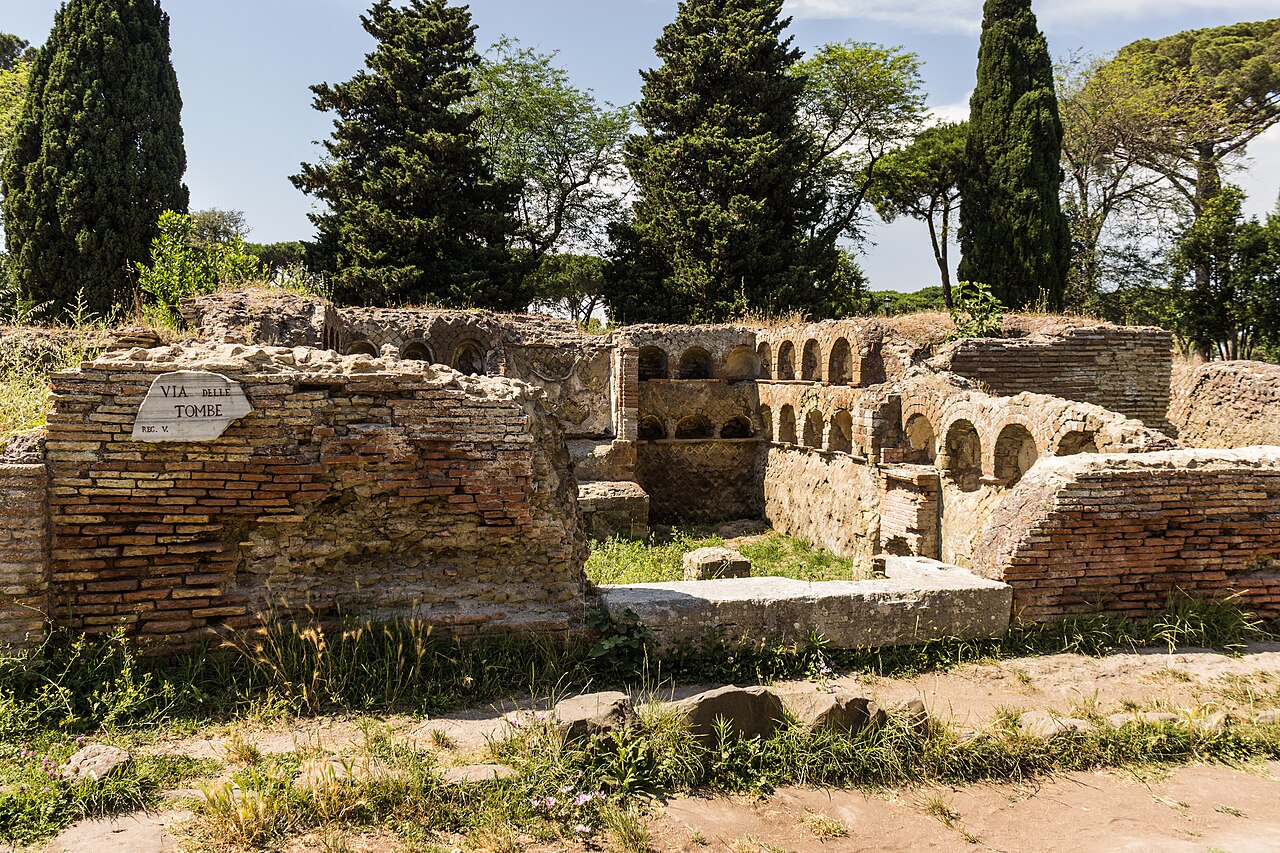
The columbaria along Via dei Sepolcri
Rows of niches held funerary urns: an encounter with burial rites and remembrance of the dead.
Actual photographs, displayed without cropping. Tap an image to enlarge it. Mosaic visibility and access to individual spaces depend on seasonal coverings and the Archaeological Park’s regulations. Authors, sources and licences.
The ships tell the story of trade.
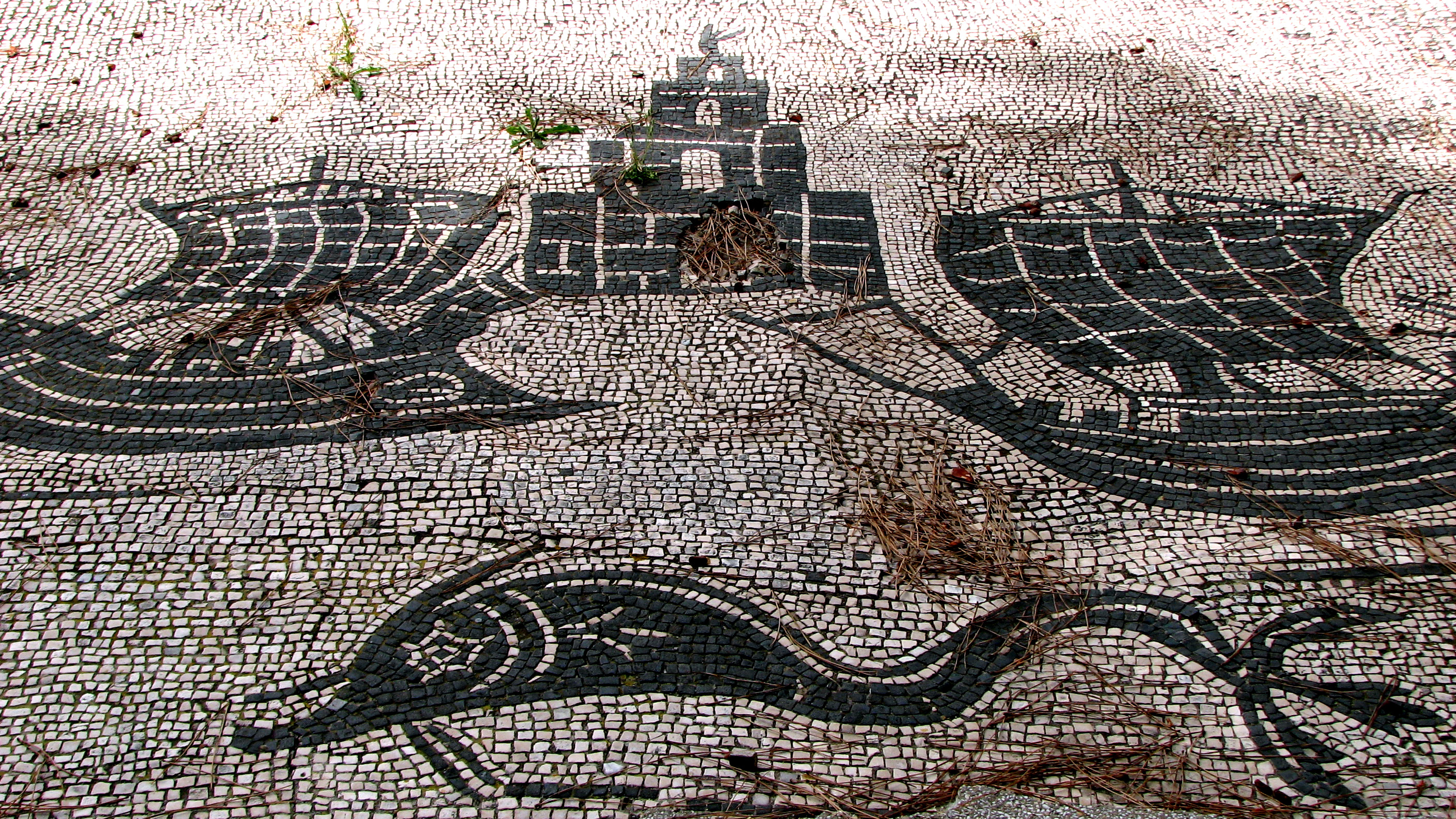
Original, uncropped photographs. Mosaics may be protected by seasonal coverings. Photographers and credits.
FROM ROME WITH A CITY TRANSPORT TICKET
Ostia is part of Rome.
Including the journey.
Ostia is part of the City of Rome. To reach the archaeological site, you can use the standard BIT city ticket, €1.50 per adult, valid for 100 minutes from first validation and also accepted on the Metromare railway.
- Travel to Piramide on metro line B/B1.
- At the nearby Porta San Paolostation, take the Metromare towards Cristoforo Colombo.
- Get off at Ostia Antica and follow the pedestrian route to the archaeological site.
- We meet at the ticket office, Viale dei Romagnoli 717, 15 minutes before the confirmed time.
Plan your arrival
The BIT follows Metrebus conditions: it is valid for 100 minutes and includes one metro journey. Validate and keep your ticket; for the return journey after the tour, you will need a new valid ticket unless you already hold a suitable travel pass.
Transport and public transport tickets are not included in the tour. Your guide will meet you directly at the archaeological site. Check service notices before travelling and allow time to walk to the ticket office.
Official BIT fares and conditions ↗
Metromare timetables and service notices ↗
Before you go.
What to bring: a bottle of water and very comfortable shoes. In summer and on hot days, we also recommend a hat and sunscreen.
Pushchairs and wheelchairs: the route includes paved streets, ancient stone slabs and uneven sections that may make access difficult. Contact us before booking so we can discuss the most suitable route and available access together.
Meeting point: directly at the archaeological site’s ticket office, 15 minutes before the agreed time. The tour does not depart from Piramide.
Small group: maximum 12 participants. For a visit with children, choose the dedicated family tour.
Languages: Italian, French, English and Spanish, on request and subject to availability.
Seasons and access
The Park opens at 8:30 from Tuesday to Sunday. Closing times: 16:30 from 25 October to the end of February; 17:15 in March; 19:00 from April to September; 18:30 from 1 to 24 October. Last admission is one hour before closing. We check opening hours for your chosen date.
Hermes calendar: Mondays and the first Sunday of each month are unavailable; also closed on 1 January and 25 December.
Mosaics in winter: the Park protects some floors, including those in the Baths of Neptune and the Square of the Corporations. Coverings may remain from December until spring; the explanations and route are adapted to what can actually be seen.
Prices: €99 per adult in a small group, including the guided visit, assistance, admission ticket and audio headsets. Public transport fares are separate and do not cover admission to the archaeological site.
Official Park information ↗