Water, fire and architecture: how an imperial wonder worked.
From the spectacle of Circus Maximus to the technical ingenuity of the Baths of Caracalla. A tour for adults exploring construction, heating, daily life and dispersed masterpieces.
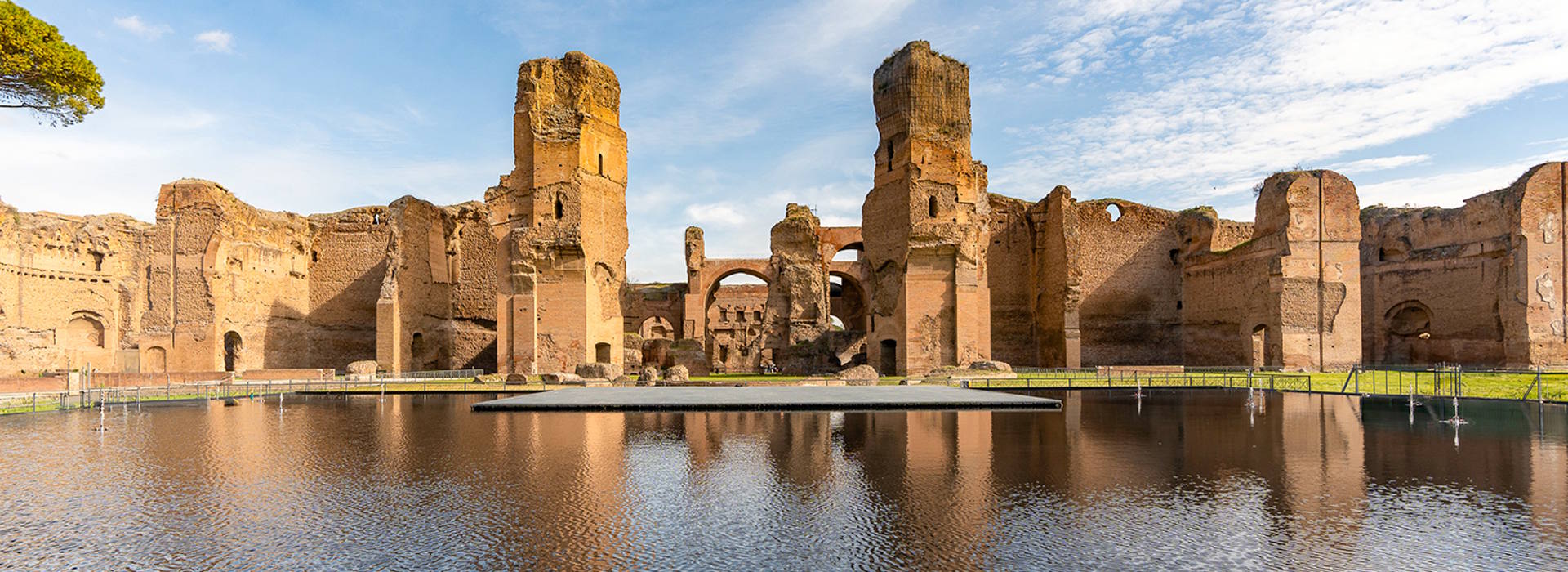
Caracalla today · The contemporary water mirror. Reference photograph: Turismo Roma / Fabio Caricchia, MiC–Soprintendenza Speciale di Roma. Credits and usage
DURATIONAround 2 hours and 30 minutes
DEPARTUREMetro B Circo Massimo · FAO side
LANGUAGES ON REQUESTItalian · French · Spanish
SMALL GROUP89 €Per person · standard adult rate Standard admission to the Baths included. Private tours on request.
IMPERIAL ROME · A TOUR FOR ADULTS
Behind the wonder, a world to understand.
How were vast rooms heated without electricity? Where did the water for thousands of people come from? And who worked to keep everything running? At the Baths of Caracalla we read the ruins to understand the design of one of antiquity’s most extraordinary structures.
The visit begins at Circus Maximus, viewed from the outside: charioteers, four-horse chariots, factions and imperial support help us picture this great valley as a place of spectacle. A walk then takes us to the baths, where architecture, technology and social life came together every day.
Using reconstructions, plans and the guide’s illustrated books, we will explore the relationship between the visible rooms and the systems that supplied them. We connect the structures with practical questions: how could a complex of this size be built, heated, supplied and managed?
LOOK. COMPARE. IMAGINE.
Circus Maximus: from a grassy valley to a grand spectacle.
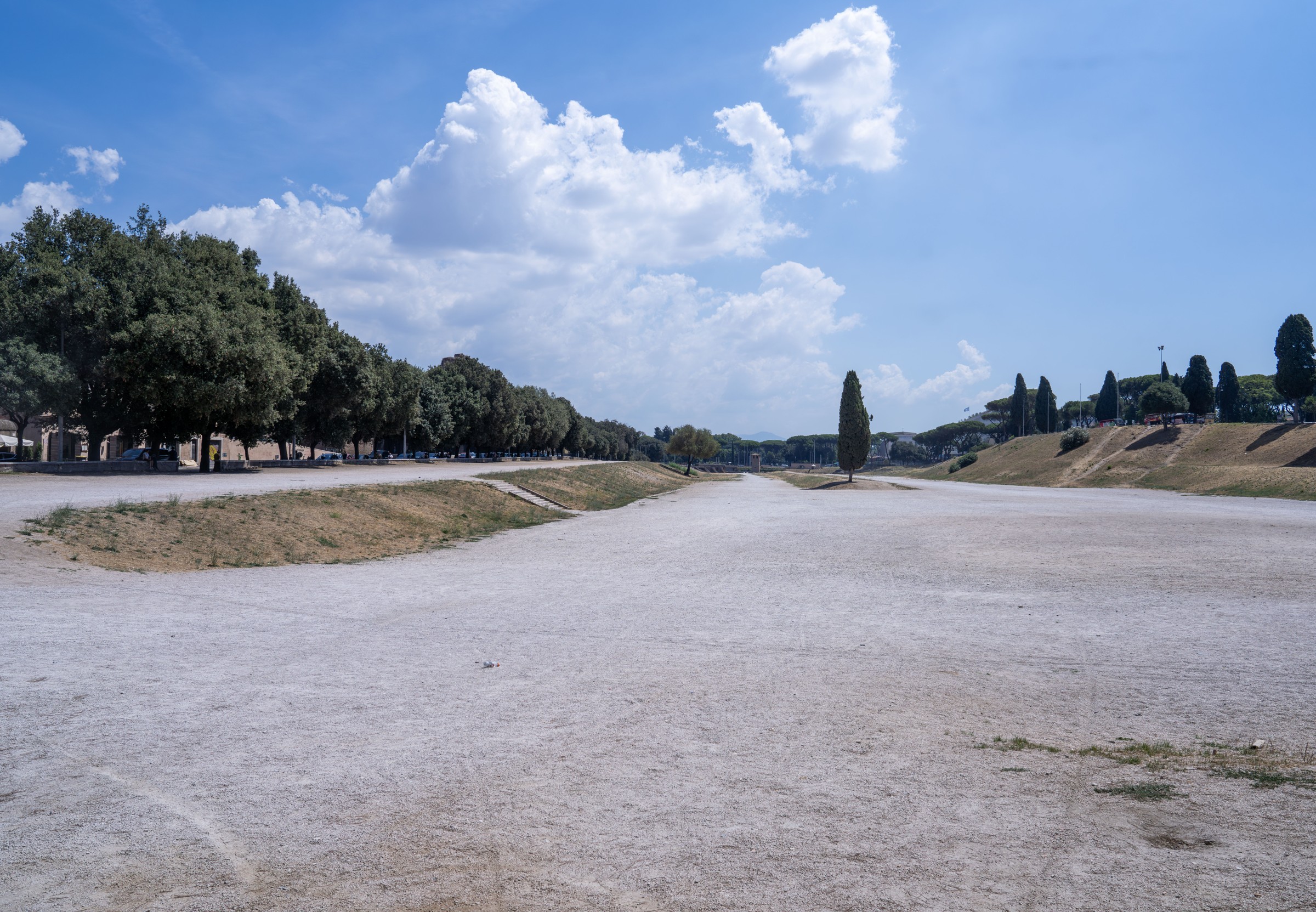
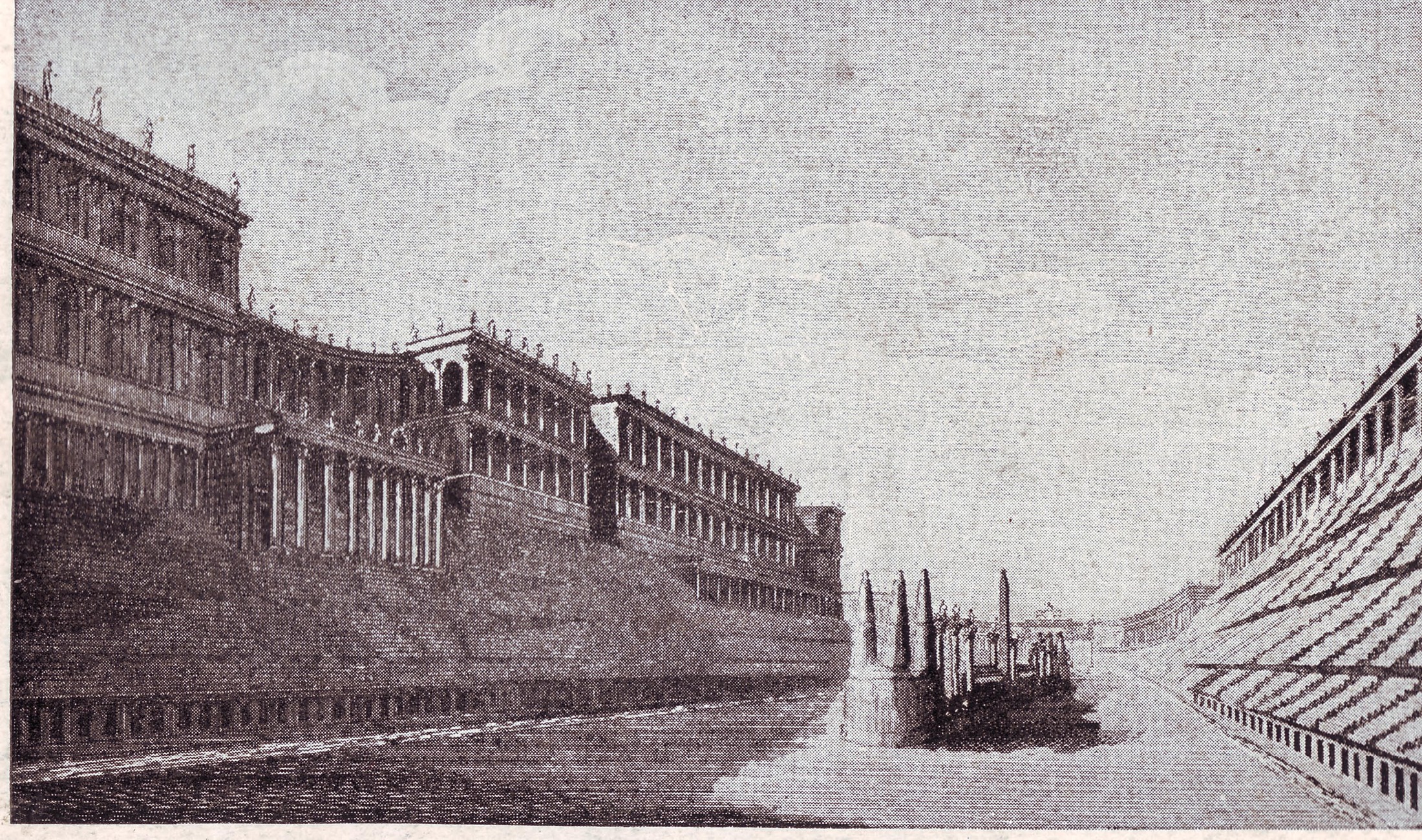
The shape of the valley meets a reconstruction of the track, seating and central barrier. Your guide connects the surviving remains with what we need to imagine.
The site today · Photograph taken on 10 August 2024. Rione Colonna, CC BY 4.0.The site reconstructed · Historical illustration, before 1914.
The reconstructions are historical interpretations: they help explain the spaces and are compared with the remains and the books shown by your guide. Image sources and credits.
THE ROUTE, STEP BY STEP
From chariot races to life at the baths.
01
Meeting point
Circo Massimo metro station, line B, exit on the FAO building side. Meet 15 minutes before the agreed time.
02
Circus Maximus
The visit begins outside: two-horse and four-horse chariots, charioteers and faction colours. We compare today’s landscape with the reconstruction.
03
From the racetrack to the baths
A walk takes us to the Baths of Caracalla, where we enter using the included standard admission ticket.
04
Architecture, systems and daily life
We explore the rooms, the water supply and the heating system. We look at the work of the staff, the people who used the baths and the fate of the Farnese masterpieces.
05
The Domus of Vigna Guidi
When open, we view the paintings in the house that predates the baths. The visit ends within the Caracalla complex.
BUILDING AND LIFE AT THE BATHS
A city within the city.
We will examine arches, vaults, bricks and Roman concrete to understand how large covered spaces were built. The construction project, inaugurated in AD 216, required immense organisation: estimates reported by the Soprintendenza indicate around 9,000 workers a day during construction. These estimates concern the construction workforce, which should be distinguished from the staff who operated the baths.
Exercise grounds, changing rooms, baths, gardens and libraries offered opportunities to exercise, care for the body and socialise. The traditionally cited capacity is around 1,600 bathers at the same time; estimates of daily attendance reach 6,000–8,000 people over the course of a day. Two different figures that help explain how visitors were managed.
Luxury coexisted with noise, crowds and very practical problems. We will discuss the safekeeping of clothes and theft in Roman baths, already mentioned by Seneca, and explore how men and women used the facilities: customs, separation and prohibitions changed over time. We compare general accounts with what can be documented specifically for Caracalla.
WATER · FIRE · ARCHITECTURE
Follow the water, understand the heat.
A branch of theAqua Marcia, the Aqua Antoniniana, supplied the complex. Cisterns and pipes distributed water to its different uses; furnaces and boilers supported the hot-bath system. We will explain how thehypocaustworked: hot gases from the furnaces passed beneath raised floors and through purpose-built channels in the walls, heating the rooms.
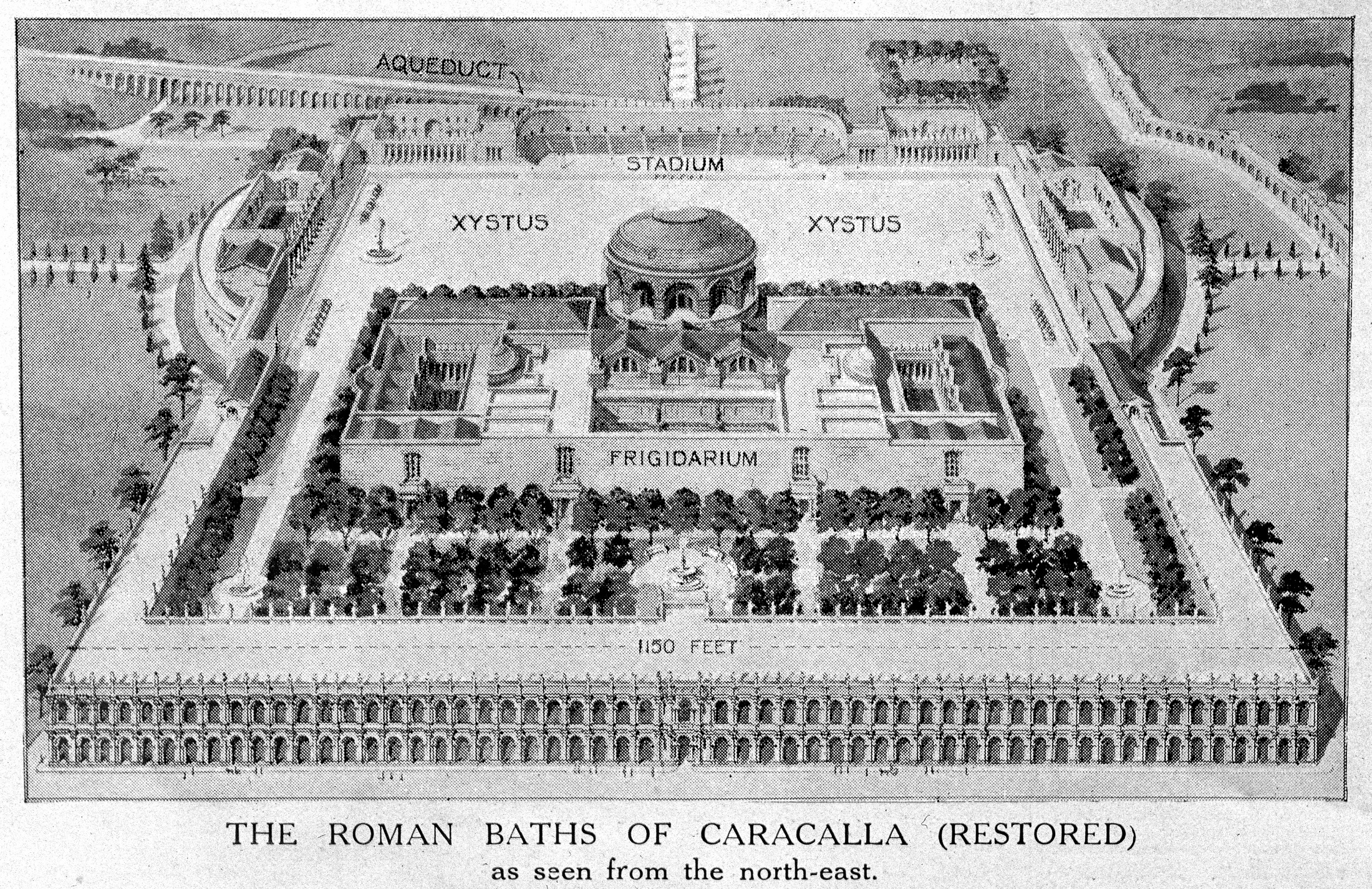
The caldarium, for hot baths, made use of its south-western exposure and the afternoon sun. The tepidarium was the moderately warm transition room; the great central frigidarium contained the cold pools. Towards the north-eastern front stood the natatio, the open-air swimming pool. Orientation, the sequence of rooms and technical systems formed a single design.
Working underground were hundreds of enslaved people and skilled workers, among timber stores, furnaces, boilers and tunnels wide enough for carts. Their labour and constant maintenance made the bathers’ comfort possible.
LOOK. COMPARE. IMAGINE.
The Baths of Caracalla: rediscovering their grandeur.
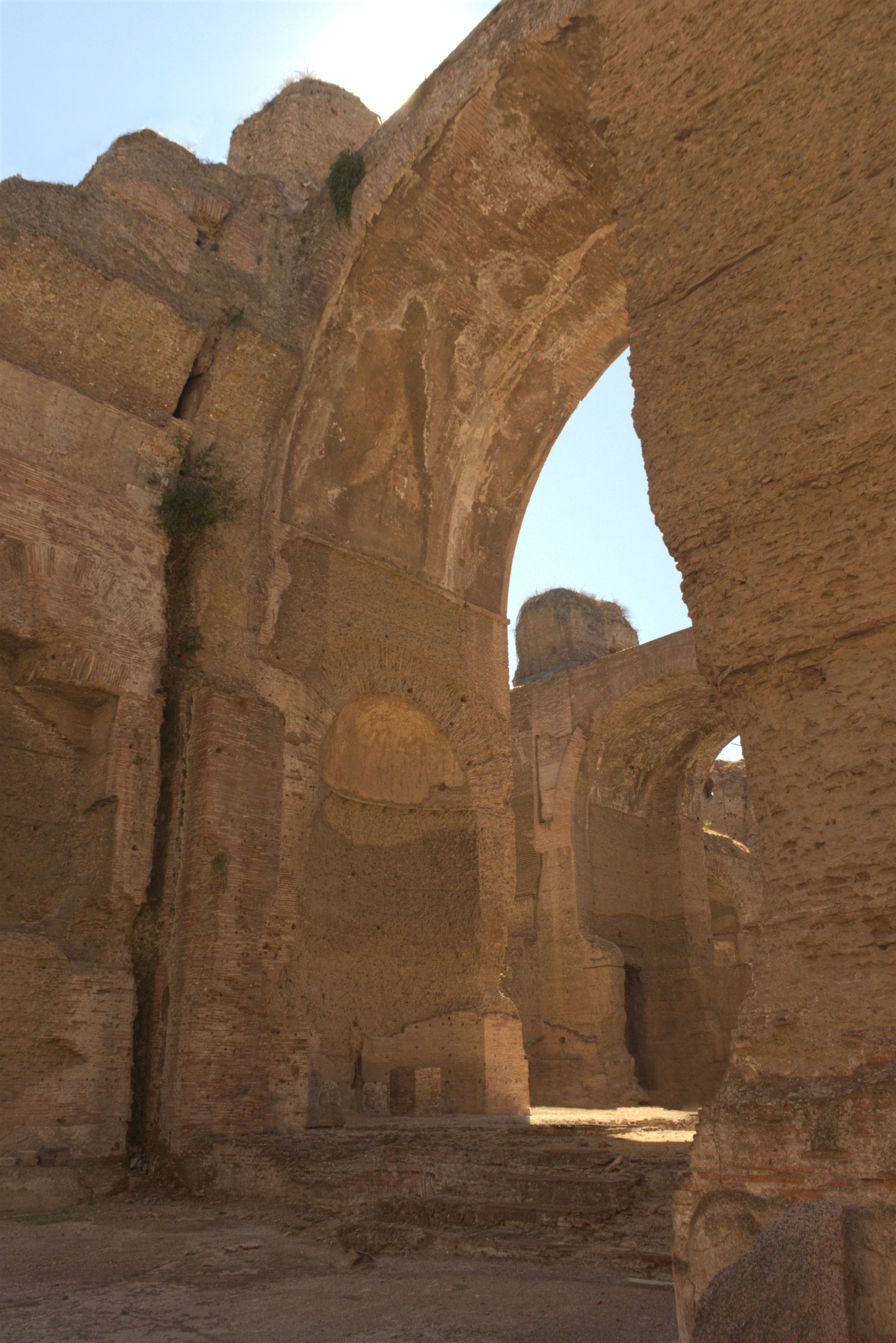
We compare the surviving structures with a reconstruction drawing of the complex. The images help explain the halls, exercise areas and routes through the baths.
The surviving architecture · Photograph taken on 18 September 2022. Graham Finney / Pexels.The site reconstructed · Architectural study from Banister Fletcher, 1924.
The reconstructions are historical interpretations: they help explain the spaces and are compared with the remains and the books shown by your guide. Image sources and credits.
FROM THE BATHS TO THE FARNESE COLLECTIONS
The artworks continued their journey.
We will trace the fate of sculptures found during the excavations and removals undertaken under Paul III Farnese, between 1545 and 1547. Entering the family’s collections in Rome and later transferred to Naples, works such as theFarnese Hercules and the Farnese Bull are now housed in the National Archaeological Museum of Naples.
Another trace of the baths remains in Rome: the two large basins reused in the fountains of Piazza Farnese, in front of the family’s palace, are made of Egyptian granite. Through images and stories, we trace their passage from the ancient complex to papal Rome.
Piazza Farnese and the museum in Naples are discussed during the tour; they are not stops on this itinerary, which ends at the Baths of Caracalla.
BEFORE THE BATHS
Domus of Vigna Guidi: the colours of an earlier Rome.
The Caracalla route preserves traces of a house that stood here before the great bath complex. The restored paintings of the Domus of Vigna Guidi offer a window into the rooms, images and religious practices of imperial Rome.
The restored paintings offer a way to explore the different phases of life on the same site, before the baths were built.
The visit is included when these rooms are open. The Domus may be closed for conservation, including on busy days such as the first Sunday of the month. In that case, the story continues using illustrated materials.
YOUR VISIT AT A GLANCE
Let’s plan your experience together.
Included
A licensed tour guide throughout the route.
A guided visit to the exterior of Circus Maximus.
Standard admission ticket and guided visit inside the Baths of Caracalla.
Reconstructions and illustrated books shown by your guide.
The Domus of Vigna Guidi when accessible.
An in-depth look at daily life and Roman engineering.
Good to know
Meeting point 15 minutes before at the Circo Massimo metro exit, line B, on the FAO building side, Viale Aventino. The tour ends at the Baths of Caracalla.
Bring comfortable shoes, water and valid ID for all participants. This is a walking tour with outdoor sections and uneven surfaces. Let us know about mobility needs or pushchairs so we can agree on access arrangements.
The underground areas, Mithraeum, paid archaeological area of Circus Maximus, headsets for virtual experiences, transport, food and drinks are not included.
Choose your tour option
SHARE IMPERIAL ROME
Small group
89 € per adult
A guided visit lasting around 2 hours and 30 minutes, with standard admission to the Baths of Caracalla included. Concessions are specified in your quotation.
Hermes confirms the departure, time and availability before booking. The Baths are normally closed on Mondays; exceptional openings and access to internal areas are determined by the site’s management.
Before your visit
Where does the tour start?
At the Circo Massimo metro exit, line B, on the FAO building side of Viale Aventino. The route starts at Circus Maximus and ends at the Baths of Caracalla.
Do we go inside the Baths of Caracalla?
Yes. The itinerary includes a standard admission ticket and a guided visit inside the Baths. Circus Maximus is explored from the outside; its paid archaeological area and the Circo Maximo Experience headsets are not included.
Will we see reconstructions of the monuments?
Yes. Your guide shows reconstructions and illustrated books to compare the surviving remains with the reconstructed appearance of both sites. A VR headset experience is not included.
Is the Domus of Vigna Guidi included?
The visit is planned when its rooms are open as part of the standard route. Opening is determined by the archaeological site and may change for conservation reasons.
How does the request work?
Book directly with Hermes: submit your details using the form, receive confirmation of availability and price, then pay online by card through the secure Revolut link. Your final voucher is issued after payment has been verified.